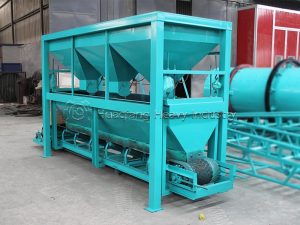
Structure and Components of a Multiple Silos Single Weigh Static Automatic Batching System
The multiple silos single weigh static automatic batching system is centered around a single weighing hopper and multiple storage bins. It features a simple structure and precise metering, and mainly consists of six parts: storage, feeding, weighing, control, conveying, and auxiliary components. It is suitable for static batching production of organic fertilizers, compound fertilizers, powders, granules, and other materials.
- Storage Unit
Composed of multiple independent storage bins, configured according to the number of materials in the formula. The bins are mostly made of carbon steel/stainless steel, with a feeding port and dust cover at the top, and a conical structure at the bottom for easy discharge; some are equipped with level gauges and arch-breaking devices to prevent material bridging and blockage, ensuring continuous feeding.
- Feeding Unit
Discharge and feeding devices are installed at the bottom of each bin. Commonly used devices include screw conveyors, electromagnetic vibratory feeders, slide gates, and discharge valves. The feeding speed is controlled in stages (fast feeding for efficiency, slow feeding for accuracy), achieving precise material control without impulse errors.
- Weighing and Metering Unit (Core)
Includes a weighing hopper, high-precision weighing sensors, and a weighing instrument. A single weighing hopper sequentially completes the metering of each material, providing high static weighing accuracy and strong stability.
- Automatic Control Unit
Centered around a PLC control cabinet and touch screen, and equipped with frequency converters, relays, and communication modules, it can preset multiple formulas and automatically control the feeding, weighing, and discharging sequence and speed. It features over-tolerance alarms, fault self-diagnosis, data storage, and remote monitoring functions, enabling fully automatic unattended operation.
- Discharge and Conveying Unit
The bottom of the weighing hopper is equipped with a pneumatic/electric discharge valve. After metering is complete, the materials are discharged centrally and conveyed to the next process (mixing, granulation, packaging) via a belt conveyor, screw conveyor, or bucket elevator.