
Selecting Production Lines for Fertilizer Granulation and NPK Blending
When planning overseas fertilizer plant projects, it is common to weigh various process options—such as disc granulation, roller press granulation, and NPK blending—as each is suited to different operational requirements. Equipment such as NPK blending machines (including bulk blending systems), organic fertilizer disc granulators, and roller press granulation production lines can collectively address the diverse production needs for bio-organic fertilizer granules and NPK blended fertilizers.
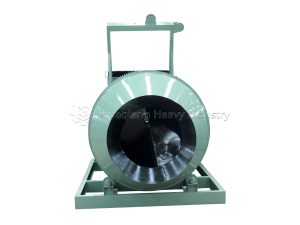
NPK blending machines—often referred to as bulk blending (BB) fertilizer equipment—are primarily used for the physical mixing of granular raw materials. In this process, individual granular fertilizers with varying nitrogen, phosphorus, and potassium (NPK) contents are measured according to a specific formula and fed into the machine, where they are mixed through mechanical agitation. This is a purely physical process; no chemical reactions occur between the raw materials. The system offers high flexibility in formula adjustments, allowing for product specification changes without significant downtime. A complete NPK blending production line integrates automated batching, conveying, mixing, and packaging, which minimizes human error in formulation. With a relatively low initial capital investment, this setup is ideal for producing a wide variety of blended fertilizers in smaller batch sizes.
For the production of spherical bio-organic fertilizer granules, an organic fertilizer disc granulator (also known as a bio-disc granulator) is typically used. As the tilted disc rotates, matured organic materials roll and aggregate on its surface, gradually forming rounded granules through their inherent adhesive properties. Both the tilt angle and the rotational speed of the disc can be adjusted to control the particle size of the final product. This equipment is simple to operate and requires minimal maintenance, making it well-suited for small to medium-sized bio-organic fertilizer plants. However, this process is sensitive to the moisture content of the raw materials; any imbalance in moisture levels can directly affect granulation efficiency.
If the raw materials are relatively dry and the addition of a drying stage is not desired, a roller press granulation production line may be a suitable alternative. Roller compaction granulation is a dry forming process that requires no binders, as it shapes powdered raw materials through the direct application of pressure. This process serves as a complement to wet disc granulation; clients can choose the most suitable method based on the characteristics of their raw materials, their budget, and the requirements for the final product.