
【FAQ】Why do the key focus areas for trial runs differ completely across three types of fertilizer production lines?
Trial runs after equipment installation are often treated as a mere formality—simply powering on the machinery to see if it moves. However, the core objectives for verifying these three types of lines are entirely distinct. Applying the same set of trial-run criteria to all three is like trying to measure blood pressure with a clinical thermometer: the tool might be appropriate for a medical setting, but the metric is wrong.
For roller-press granulation lines, the trial run must verify the stability of the “recycled material closed loop.” It is not enough to simply check whether the machine produces compacted sheets or granules; the critical metric is the ratio of recycled material (fines and oversized particles) over a continuous run of at least two hours. These materials are returned to the roller press via a conveyor system, and the ideal recycle ratio typically falls between 30% and 50%. If this ratio climbs steadily during the trial, it indicates that the roller gap, pressure, or material moisture content has drifted outside the optimal range—resulting in loose, fragile sheets that break down into excessive fine powder. The maturity of a roller-press granulation process is demonstrated by the stability of this recycle ratio during continuous operation, rather than by how impressive the initial output looks.
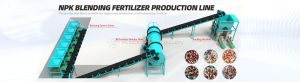
For BB fertilizer blending lines, the trial run must verify “batching repeatability” and “segregation prevention.” The focus here is not merely on how smoothly the mixer operates, but on the performance of the “multiple-silo, single-weigh” static batching system. Over a sequence of 10 to 20 consecutive batches using the same formula, one must ensure that the deviation between the actual dispensed amount of each ingredient and the target formula value remains stable. Achieving accuracy in a single batch is just the starting point; the true capability of the production line lies in the absence of “drift” between batches. Furthermore, samples should be taken from various points at the mixer discharge outlet to analyze nutrient distribution, and additional samples should be collected prior to packaging to confirm that the conveying and gravity-feeding processes do not cause secondary segregation. Test-run reports for BB (bulk blend) fertilizer production lines should include data on batch-to-batch consistency (repeatability) and nutrient uniformity across different bags.
For bio-organic fertilizer production lines, the test run must verify the “temperature chain” and the survival rate of viable microorganisms. Evaluating such a line involves more than just checking the granulation efficiency or the roundness of the granules produced by a disc granulator. The critical metrics to assess are: whether the material temperature remains stable below 55°C throughout the granulation process; whether the survival rate of the functional microbial strains meets the required standards; and whether the discharge temperature from the dryer is effectively controlled within the 45–50°C range. If, during the test run, water spray volume is increased or the retention time in the granulator is extended solely to improve granule formation, the resulting localized frictional heat may exceed the critical temperature threshold—yielding aesthetically pleasing granules that, in reality, fail to meet the required viable microbial count. Consequently, test-run reports must include temperature profiles and microbial counts, rather than focusing exclusively on granulation rates.
Test-run reports for these three types of production lines should address distinct, specific questions: For an extrusion line, the focus is on whether the material recirculation loop can remain stable; for a BB fertilizer line, it is whether consistency can be maintained between batches; and for a bio-organic fertilizer line, it is whether the microbial strains remain viable throughout the process. If these three separate assessments are conflated into a generic, catch-all conclusion—such as “equipment operating normally”—any underlying issues are likely to surface collectively within the first three months of full-scale production. A test run should not be treated as a mere formality; rather, it is a vital opportunity to proactively identify the genuine shortcomings of a production line.