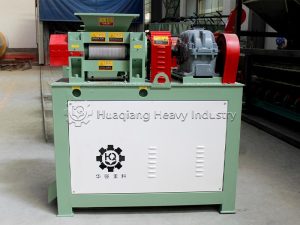
Key Considerations for Roller Sleeve Replacement in Double Roller Press Granulators
Roller sleeves are core, easily worn components of double roller press granulators, directly determining granulation rate, output, and service life. Replacement selection must consider material conditions, material composition, processing technology, and machine specifications.
First, material selection is crucial. Different materials require different roller sleeves. For conventional organic fertilizers and soft raw materials, alloy steel is a suitable choice due to its economical price and suitability for daily production. For compound fertilizers, materials containing mineral powder, or materials with higher hardness, high-manganese steel or high-chromium alloy roller sleeves are preferred. These offer superior wear resistance, resistance to extrusion, and are less prone to wear and chipping, resulting in a service life two to three times longer than ordinary materials, significantly reducing replacement frequency.
Second, the specifications must perfectly match the equipment. Strictly adhere to the roller sleeve’s outer diameter, length, and inner hole dimensions. Simultaneously, select the appropriate ball and socket diameter based on the finished particle size. Incorrect dimensions will cause assembly deviations, severe material leakage, and a decreased granulation rate.
Furthermore, consider the processing technology. Prioritize roller sleeves that have undergone overall quenching and heat treatment, as these offer uniform hardness, good toughness, and are less prone to cracking and deformation during operation. The inner surface of the roller cavity is smoothly polished, ensuring smooth material discharge and demolding, preventing material sticking and clogging, and resulting in higher production efficiency.
Finally, considering production needs, for high daily output and long-term continuous production, the high-performance wear-resistant model is recommended; for small to medium-sized intermittent production, the economical model is suitable. Roller skins from reputable manufacturers are precisely crafted with small tolerances, facilitating assembly, effectively reducing failure rates, saving on later maintenance costs, and ensuring stable operation of the roller press granulator production line.