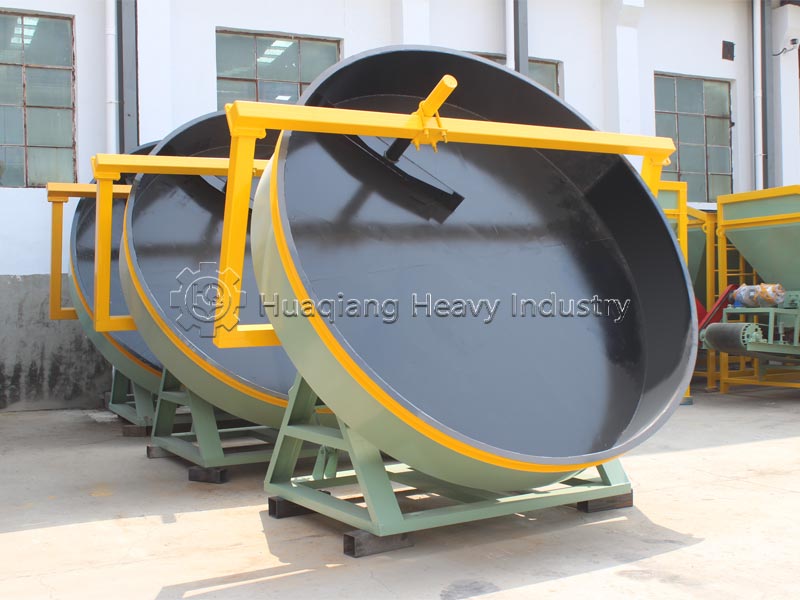
Causes of Scraper Damage in Organic Fertilizer Disc Granulator Machines
The scraper is a key component in organic fertilizer disc granulator machine, responsible for cleaning accumulated material from the disc walls and ensuring smooth granulation. It is prone to wear, deformation, breakage, and loosening. The causes of damage can be mainly categorized into four types: material-related, installation and commissioning-related, equipment operation-related, and routine maintenance-related.
Material factors are the primary cause. Organic fertilizer raw materials often contain impurities such as stones, metal scraps, and hard lumps. During operation, these hard objects continuously impact and scrape the scraper, easily causing chipping of the cutting edge and deformation of the blade. Improper raw material moisture content also exacerbates wear. Wet materials tend to stick to the disc walls, causing the scraper to scrape under high load for extended periods; dry materials contain more dust and have higher hardness, accelerating normal blade wear. Long-fiber materials entangled in the gap between the scraper and the disc body increase operating resistance sharply, easily bending or breaking the scraper.
Improper installation and commissioning can leave inherent hidden dangers. If the gap between the scraper and the disc is too small, continuous friction against the disc during operation will not only wear down the blade but also cause the blade to bend due to excessive resistance. If the gap is too large, the material will not be cleaned thoroughly, and the accumulated material will repeatedly squeeze the scraper. Loose fixing bolts or missing washers will cause the scraper to wobble and shift during operation, and uneven force will cause it to loosen or even fall off quickly. Furthermore, a deviation in the scraper angle and an unreasonable force direction will also significantly shorten its service life.
Improper operation and management of bio-organic fertilizer equipment will also aggravate damage. Long-term overload operation and frequent start-stop cycles subject the scraper to repeated impact loads; setting the disc speed too high increases the centrifugal force of the material, thus increasing the impact force on the scraper. Failure to stop the machine in time to remove entangled materials and large hard pieces during production will directly cause the scraper to break.
Inadequate daily maintenance also affects service life. Failure to regularly check and tighten fixing bolts and promptly repair worn parts will allow small faults to gradually develop into serious damage. After long-term use, dulling of the blade and material fatigue, if not replaced in time, will also lead to deformation and breakage.