
【FAQ】How does disc granulation preserve microbial viability in bio-organic fertilizers?
The core value of bio-organic fertilizer lies in its functional microorganisms—such as Bacillus subtilis, Bacillus licheniformis, and Trichoderma. However, throughout the long chain from production to application, these microscopic “living factories” face constant challenges. Even a slight deviation in temperature can cause survival rates to plummet from 99% to below 30%. Disc granulators have become the preferred equipment for bio-organic fertilizer production precisely because they offer advantages in preserving microbial viability that other processes cannot match.
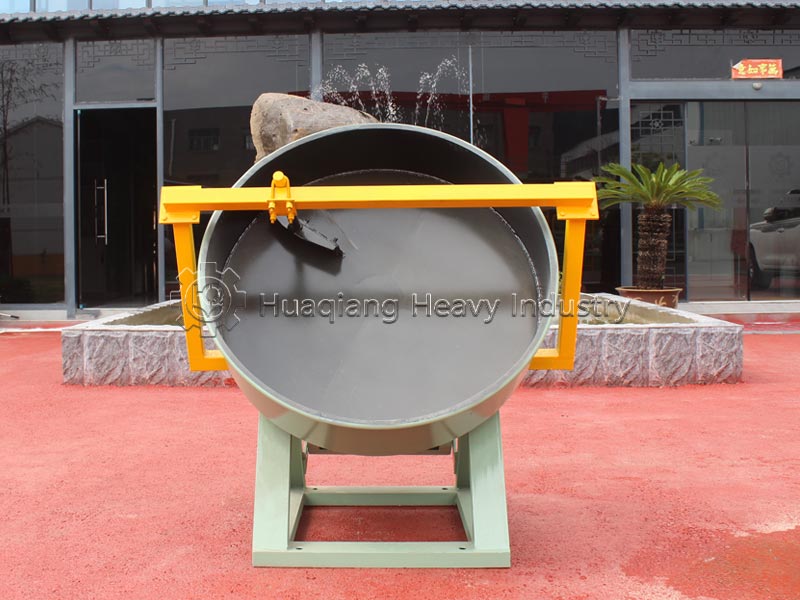
The core advantage of disc granulation: low-temperature physical forming. In bio-organic fertilizer production, the most critical stage—where viability is most at risk—is not mixing or packaging, but the granulation temperature. Research shows that when temperatures exceed 60°C, 80% of microorganisms perish. In contrast, traditional high-temperature granulation processes (such as rotary drum granulation followed by drying) typically operate above 80°C, leaving a microbial survival rate of only 30%–50%. Disc granulation operates differently: materials agglomerate into spheres through natural rolling on an inclined, rotating disc. This is an entirely physical process, with temperatures remaining below 55°C. This low-temperature granulation method can boost microbial survival rates to over 80%. Microorganisms are added directly to the powdered organic matter and remain intact after granulation. For formulas requiring functional microbial agents, the agent can be mixed with microbial residue at a 1:5 ratio to increase volume before being added to the raw materials. Brown sugar water or starch solution is recommended as a binder; these provide a carbon source while avoiding the inhibitory effects that chemical substances might have on the microorganisms.
The choice of process is critical. When producing organic-inorganic bio-active fertilizers via disc granulation, the specific production method significantly impacts the survival rate of the specialized microorganisms. Research indicates that to meet the technical standard of 10–20 million viable specialized microbial cells per gram of finished fertilizer, one should avoid processes involving the co-granulation of microorganisms with organic-inorganic materials followed by drying. Instead, a drying-free production process or a separate coating/granulation method should be employed. This implies that the operational logic of the entire production line—centered around the bio-disk organic fertilizer machine—must adhere to the principle of “low-temperature granulation and ambient-temperature forming.” High-temperature drying should be avoided after disk granulation; instead, low-temperature air drying or natural air drying is recommended. If drying is necessary, the inlet air temperature should be controlled between 60°C and 80°C, while the outlet air temperature is maintained between 40°C and 50°C.
The “silent killer” during storage: Granulation is merely the first step. Shelf-life tests indicate that the decline rate of functional bacteria during storage can be even faster than during the production process itself. The granular form provides microorganisms with a more stable micro-environment compared to powdered fertilizers, allowing the viable bacterial count to remain effective even after 60 days of storage. Furthermore, practical tests show that the addition of carriers can further enhance survival rates. For granulated bio-organic fertilizer, the breathability of the packaging material is equally critical: excessive sealing leads to microbial death due to oxygen deprivation, whereas excessive breathability allows moisture ingress that compromises activity. The bio-organic fertilizer disk granulator boosts microbial survival rates to over 80% through low-temperature granulation (≤55°C)—significantly outperforming traditional high-temperature granulation equipment. Complementary low-temperature, high-airflow drying technology can push microbial survival rates above 90%. From adjusting the disk tilt angle to controlling drying temperatures, the selection of every parameter addresses the same fundamental question: how long will the bacteria inside this granule remain alive?