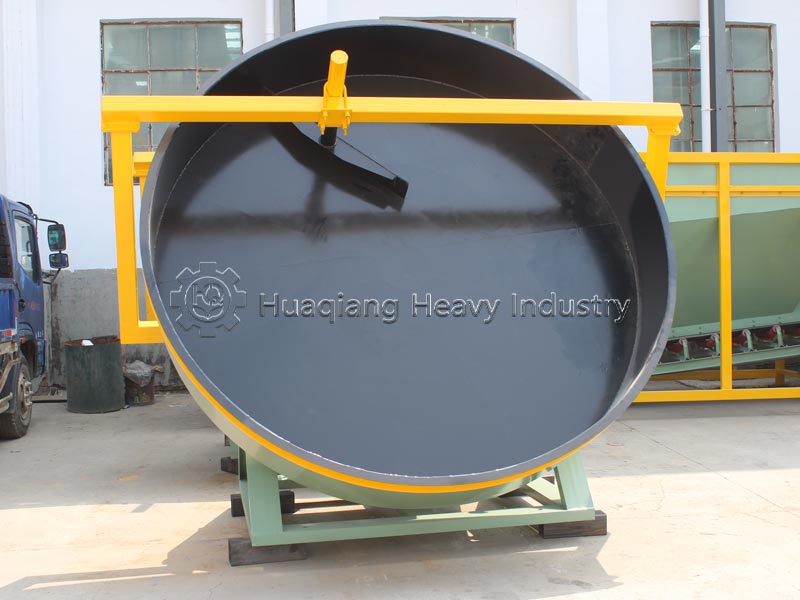
How to Calculate the Output of a New TypeTwo in One Organic Fertilizer Granulator
Calculating the output of the new type two in one organic fertilizer granulator is a straightforward and intuitive process. Fundamentally, by combining the equipment specifications, filling volume, molding cycle, and material characteristics, one can accurately determine the hourly production capacity—facilitating equipment selection and site planning for the client.
First, the calculation is based on the effective volume of the fertilizer production machine. Since the “two-in-one” granulator integrates both mixing and granulation functions, it is essential to reference the machine body’s effective processing volume. This must be combined with a reasonable filling coefficient; typically, the filling ratio for wet organic fertilizer materials is maintained between 50% and 70% to prevent clogging or motor stalling caused by full-load operation, thereby ensuring smooth granulation.
Second, one must calculate the production cycle for a single batch, encompassing the entire process: feeding, mixing, extrusion granulation, and discharging. Raw materials such as fermented manure or straw residue—characterized by a loose texture and appropriate moisture levels—require a shorter batch processing time. Conversely, materials that are highly viscous, high in moisture, or rich in fibrous content will have a slower molding speed; the cycle duration will extend accordingly, directly reducing the output per batch.
Next, the weight of a single batch is calculated by incorporating the material’s bulk density. By multiplying the effective volume, the filling coefficient, and the material’s specific gravity, one obtains the material yield per batch. This figure is then multiplied by the number of batches processed per hour to derive the theoretical hourly output. In actual production, however, one must deduct the intermittent time required for feeding, machine cleaning, and material pretreatment.
Furthermore, actual output is influenced by factors such as the raw material’s moisture content, particle fineness, and formula ratio. The addition of humic acid or viscous auxiliary agents can accelerate granulation and boost production capacity, whereas materials containing high levels of impurities or severe clumping will reduce granulation efficiency. Additionally, the configuration of the equipment’s motor power and rotational speed—as well as daily operational factors such as paddle wear and material adhesion to the inner walls—may cause slight deviations between the theoretical and actual outputs. Consequently, equipment selection and pricing quotations are ultimately based on the output achievable under actual operating conditions.