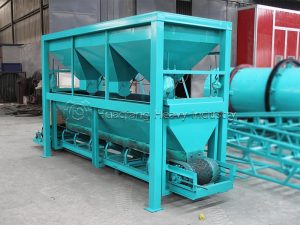
Distinguishing Between multiple Silos Single Weigh Static Batching System and Single Silo Single Weigh Dynamic Batching Systems
Multiple Silos Single Weigh Static Batching Systems and single silo single weigh dynamic batching systems represent two commonly employed weighing methods in fertilizer production. They exhibit distinct differences in terms of operating principles, batching accuracy, and applicable scenarios—factors that directly influence production line configuration and product quality.
The multi-bin single-scale static batching system utilizes a single shared weighing hopper for multiple storage bins. Materials are fed sequentially according to a specific formula batch and weighed cumulatively. Since weighing occurs while the materials are stationary, the process remains unaffected by vibrations from the conveying mechanism; consequently, it offers high batching accuracy, with errors controllable within ±0.5%. This capability meets the precise batching requirements for multi-ingredient fertilizers, such as compound fertilizers, BB fertilizers, and organic fertilizers. The system can store multiple formulas, facilitates convenient material changeovers, minimizes residual material between batches, and presents a low risk of cross-contamination. It is well-suited for small-to-medium-scale fertilizer production lines characterized by variable formulas and strict batching specifications. However, the equipment structure is relatively complex; operating primarily in a batch mode, it offers limited continuous production capacity.
The single-bin dynamic batching system relies on belt conveyors or screw conveyors to perform real-time weighing while materials are in motion. It is applicable only to the continuous weighing of a single specific material and cannot simultaneously handle the batching of multiple different materials. Its weighing accuracy is comparatively lower, with errors typically ranging between ±1% and ±2%, and it is significantly susceptible to fluctuations in material flow rate and equipment vibration. Its advantages lie in its simple structure, lower cost, and continuous, stable operation. It is ideal for the high-volume conveying and weighing of single raw materials—such as urea or ammonium phosphate—and is frequently utilized in the production of basic fertilizers characterized by high output volumes and fixed formulas.
In summary, the static batching system is the preferred choice for the precise batching of multiple materials, whereas the dynamic batching system is selected for the high-volume weighing of single materials. The appropriate choice between these two systems should be determined based on a rational assessment of specific production processes, formula requirements, and planned production capacity.