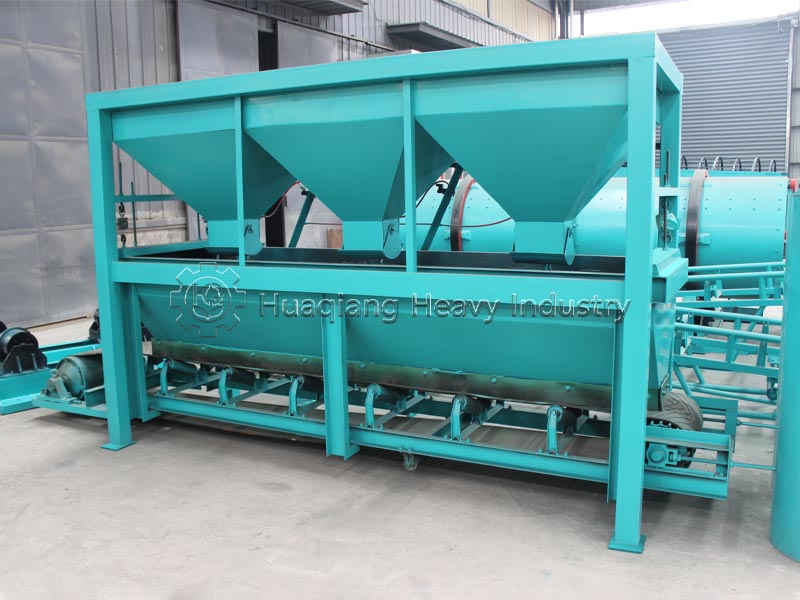
Multiple Silos Single Weigh Static Batching System Application Scenarios
The multiple silos single weigh static batching system (multiple bins, one weigher) is a cost-effective intermittent batch batching solution with clearly defined core application scenarios. This system achieves automated and precise batching while controlling costs through a structure where multiple bins share a single high-precision weighing hopper.
It is primarily suitable for small- to medium-scale bio organic fertilizer production lines. Typical application industries include small- to medium-sized fertilizer processing and feed production. For example, in organic fertilizer and compound fertilizer manufacturing, where there are many types of raw materials but single-batch outputs are typically in the several-ton range, the system can flexibly and economically complete batch proportioning of raw materials such as manure, straw, microbial agents, and chemical fertilizers. Similarly, in complete feed or premixed feed production lines, it can well match the “batch mixing” process rhythm. This system is particularly friendly to factories with limited investment budgets but who want to improve automation and accuracy.
Its working mode determines its applicable boundaries. Due to the principle of “sequential batching and cumulative weighing,” all raw materials must be added to the weighing hopper one by one, resulting in a relatively fixed batching cycle. Therefore, it is best suited for projects with 3 to 8 types of raw materials that do not require extremely continuous high-speed production. If the production line requires 24-hour uninterrupted, large-tonnage continuous feeding, then a loss-in-weight scale or belt scale is a better choice. Conversely, for a medium-capacity line producing multiple batches per day with flexible formula adjustments, a multi-warehouse receipt scale demonstrates significant advantages in terms of compact structure, simple maintenance, and controllable costs.
In summary, this system is a classic design that strikes a balance between “formulation flexibility,” “ingredient accuracy,” and “equipment investment,” making it a pragmatic choice for small and medium-sized fertilizer and feed mills to achieve automation upgrades.