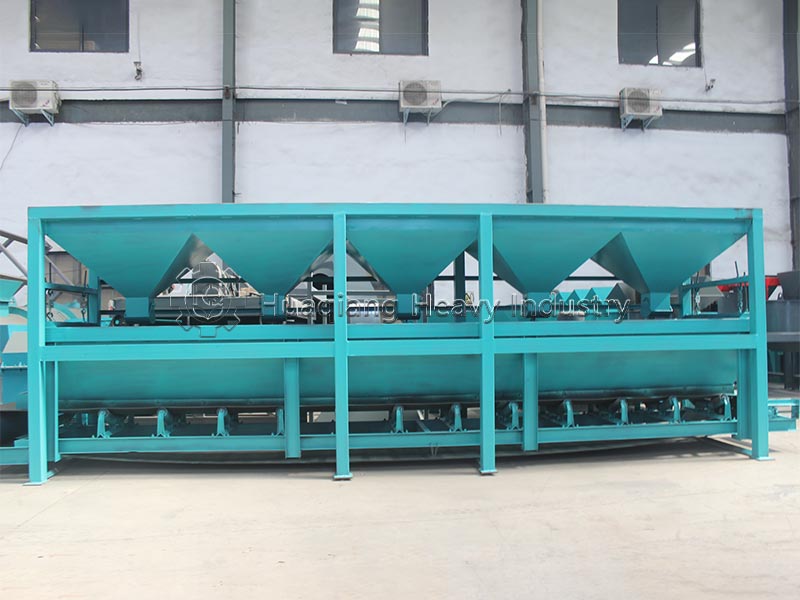
What precautions should be taken when unloading from a multiple silos single weigh batching system?
The unloading process of a multiple silos single weigh batching system directly affects the batching accuracy, equipment lifespan, and the stability of the entire bio-organic fertilizer production line. The following points should be emphasized during operation and daily use:
First, ensure that batching is completely finished before unloading. It is strictly forbidden to open the door prematurely during batching to avoid material ratio errors and inaccurate weighing data. During unloading, ensure that no personnel are near the weighing hopper and that no debris obstructs the discharge port to prevent material blockage or safety accidents.
Second, control the unloading rhythm. The cylinder gate should not be opened or closed too abruptly or quickly. Sudden, forceful opening can cause violent shaking of the entire machine, damaging the weighing sensor and leading to increased batching errors over time. Maintain the air pressure within the standard range. Low air pressure will cause unloading jams and large residues, while high air pressure can damage the gate and sealing rubber.
Then, constantly monitor the residual material in the weighing hopper. Each unloading operation must be completely emptied. Excessive material buildup and powder accumulation on the weighing walls will continuously affect the accuracy of the next batch’s batching. For sticky materials, regularly clean the inner walls to prevent moisture absorption and clumping.
The conveyor equipment connected to the unloading system should be started under no-load in advance, ensuring the downstream section starts first, followed by the unloading gate, to avoid instantaneous material accumulation and blockage. Vibration and contact with the weighing frame are strictly prohibited during unloading. Do not step on the weighing supports, as this will interfere with sensor signals and cause weighing errors.
Regularly inspect the unloading gate’s sealing strips, cylinder push rods, and hinge pins. Replace or maintain any components promptly if wear, leakage, or incomplete return to their original position is observed. In rainy weather, ensure the sensors and electrical control box are waterproofed and moisture-proofed. In dusty unloading environments, perform dust removal to extend the lifespan of components.