
NPK Bulk Blending Line Procurement Guide: Three Key Technical Questions for Engineers
When sourcing NPK bulk blending fertilizer production lines, the search intent of engineers and procurement managers differs significantly from that of general readers. Rather than asking “What is BB fertilizer?”, they search directly for terms like “ISO-certified NPK bulk blending machine supplier” or “NPK blending machine batch accuracy”—high-intent, long-tail keywords are the key to B2B lead generation. The following three questions represent the core concerns most frequently raised by overseas buyers during the equipment selection phase.
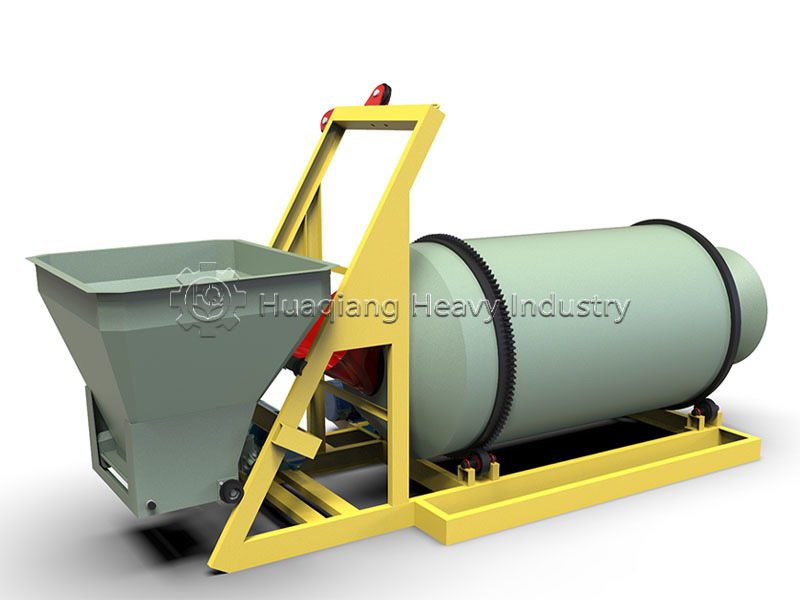
Question 1: What level of batching accuracy can be consistently maintained?
The batching accuracy of the NPK bulk blending machine is the cornerstone of quality for the entire production line. Mainstream solutions utilize a static weighing structure featuring multiple hoppers and a single scale: each hopper holds a specific raw material, and the system dispenses ingredients sequentially into a high-precision weigh hopper according to the formula. The weight is recorded after each ingredient is added, and the complete batch is discharged into the mixing stage only after all components are weighed. For materials with uniform granules and good flowability—such as urea and potash—the proportion error can be controlled within ±0.2%. This level of accuracy directly meets the requirements for official inspection reports needed for export orders and direct supply contracts with large-scale farms.
Question 2: How does the mixing process ensure uniformity despite differences in specific gravity?
Variations in the bulk density of different raw materials present the most challenging physical issue in the blending process. Urea has a bulk density of approximately 0.75 g/cm³, monoammonium phosphate (MAP) is around 0.95 g/cm³, and potassium chloride (MOP) reaches as high as 1.98 g/cm³. During transport, vibration can cause the mixed material to undergo secondary segregation—where lighter granules rise and heavier ones sink—potentially resulting in a significant discrepancy between the actual nutrient content in the bag and the specified formula by the time it reaches the farmer. The solution employed by NPK blending machines is low-speed convective mixing: twin-shaft paddles drive the granules to repeatedly exchange positions within the mixing chamber at a controlled speed. This keeps the coefficient of variation for mixing uniformity consistently below 5% while maintaining an extremely low rate of granule breakage. Another detail often overlooked in industry practice is the control of raw material particle sizes through pre-screening; ideally, the difference in average particle size between components should be kept within 1 millimeter, a measure far more effective than simply extending the mixing time.
Question 3: What key technical specifications must be verified before equipment delivery?
When selecting an NPK blended fertilizer production line, one should not focus solely on the “hourly production capacity” figure. Experienced buyers require suppliers to provide a comprehensive specifications sheet covering installed power, the coefficient of variation for mixing uniformity, batching accuracy, equipment footprint, and noise levels. Quality system certifications, such as ISO 9001, serve as a quick initial benchmark for screening qualified suppliers.