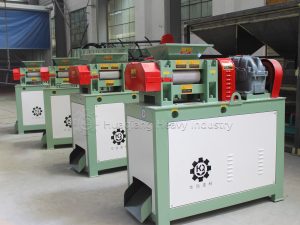
Methods to Extend the Service Life of Roller Shells in Double Roller Press Granulators
Roller shell wear in double roller press granulators mainly stems from wear, impact, corrosion, and fatigue cracking. Proper operation in four aspects—material control, equipment debugging, daily maintenance, and inspection and protection—can effectively extend the service life.
Strictly controlling the quality of feed material is fundamental. The moisture content of the raw material must be consistently below 8%. Wet material easily sticks to the die orifice, exacerbating localized wear. Pre-screening and impurity removal are crucial to thoroughly remove hard impurities such as stones and iron blocks, preventing chipping and cracking of the roller surface due to impact. Simultaneously, ensuring uniform powder fineness reduces repeated extrusion and wear on the inner wall of the die orifice by large particles.
Properly adjusting the parameters of the fertilizer production machines is essential. The gap between the two rollers should be set according to the standard particle size. Avoid excessive pressure, as high pressure will accelerate roller shell fatigue deformation and shorten its lifespan. Control the feeding speed and feed rate to maintain uniform material distribution, avoiding uneven loading and one-sided force to prevent uneven wear on the roller surface. Regularly calibrate the coaxiality of the rollers to avoid vibration and impact during operation.
Standardize daily operation and cleaning. After shutdown, promptly clean any residual material from the die holes to prevent clumping, hardening, and cracking of the die cavity. When producing corrosive fertilizers (potassium chloride, ammonium chloride, etc.), clean the roller surface daily after shutdown, and perform simple anti-corrosion wiping if necessary. Prolonged idling or high-speed operation with material is strictly prohibited to reduce unnecessary friction.
Perform regular maintenance and protection. Inspect the roller surface for wear, die hole blockage, and cracks daily; promptly repair minor wear by welding or grinding. Regularly lubricate bearings and transmission parts according to operating conditions to ensure smooth operation. For high-corrosion and high-wear conditions, select roller skins of suitable materials and use dustproof and anti-corrosion covers. Rotate roller skins on a cyclical basis to avoid continuous full-load operation of a single roller, thus reducing overall wear.