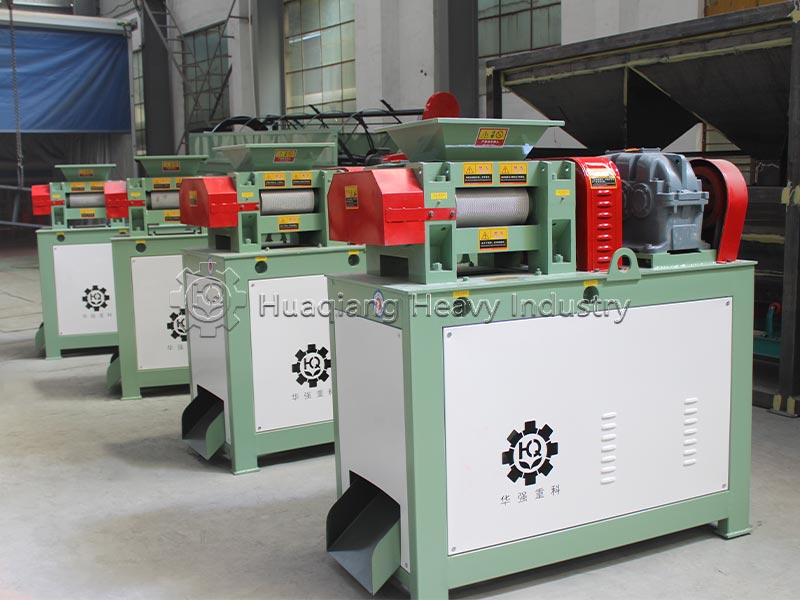
Methods to Solve Blockage and Stalling in Double Roller Press Granulators
Blockage and stalling in double roller press granulators are often caused by uneven feeding, excessively wet materials, clumping of impurities, and excessive pressure. Solutions can be targeted at three aspects: raw materials, operation, and equipment.
Controlling the moisture content and cleanliness of the raw materials is fundamental. Maintain the moisture content between 5% and 10%. Excessive moisture causes materials to stick to the rollers and clump together, while excessive dryness results in poor molding and slippage. Remove stones, plastics, and hard lumps from the raw materials beforehand. Equip the machine with screening and impurity removal equipment to prevent hard objects from jamming the rollers. Avoid feeding large amounts of clumped raw materials at once to prevent sudden overload and stalling.
Standardize the feeding method, using uniform and quantitative feeding, and equip the machine with a variable frequency speed-controlled hopper to prevent excessive or rapid feeding. If feed deviation or one-sided accumulation occurs, adjust the distributor promptly to ensure even distribution of material on the roller surface and reduce localized overload. If any signs of impending blockage appear, immediately stop feeding and run the machine unloaded to discharge excess material; do not force it to start.
Adjust the working pressure appropriately, adjusting the roller pressure according to the characteristics of the raw materials to avoid excessive load caused by excessive pressure settings. When commissioning new equipment, gradually increase the pressure; do not adjust to the maximum pressure all at once to prevent sudden resistance exceeding limits and causing the machine to stall. Replace severely worn rollers promptly to avoid material blockage caused by uneven gaps and insufficient compression.
Strengthen equipment maintenance, regularly checking the lubrication of bearings and gears to ensure smooth operation of transmission components. When clearing blocked materials, first disconnect the power and stop the machine before manually clearing the blockage; never clean while the machine is running. Regularly clean residual material from the die holes to prevent blockage and poor material discharge. Simultaneously check the motor and transmission system to ensure sufficient power, reducing the probability of machine blockage and stalling from the source.