
Key Considerations and Equipment Selection for the Fermentation Treatment of Livestock and Poultry Manure
As the primary raw material for organic fertilizer production, the quality of fermented and composted livestock and poultry manure directly determines the quality and safety of the final organic fertilizer product. Consequently, the adoption of scientific fermentation processes and appropriate equipment is crucial for achieving the harmless disposal and resource utilization of this manure. Currently, the predominant method employed is aerobic fermentation, which requires strict control over various parameters to ensure thorough decomposition.
During the fermentation process, livestock and poultry manure must be mixed with auxiliary materials—such as crop straw and mushroom residue—to adjust the moisture content to approximately 65% and the carbon-to-nitrogen ratio to between 20:1 and 30:1. After inoculating the mixture with fermentation microbes, the material is formed into compost piles. These piles typically measure 2 meters in width, 1.5 to 2 meters in height, and no less than 2 meters in length, with the initial starting temperature maintained above 15°C. The fermentation cycle spans approximately 15 to 20 days; during this period, the piles must be turned periodically. Specifically, when the internal temperature rises above 75°C, the piles require frequent turning; the composting process is considered complete once the temperature stabilizes within the range of 35°C to 40°C.
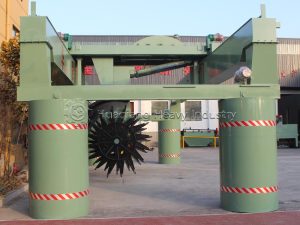
The selection of fermentation equipment should be tailored to the scale of the facility. Small-scale livestock farms may opt for self-propelled compost turners, which offer flexibility and freedom from site constraints, making them ideal for windrow composting systems. Medium-sized organic fertilizer plants may prefer trough-type compost turners; these machines ensure thorough fermentation and high efficiency while effectively preventing the generation of malodorous gases, thereby meeting environmental protection standards. Chain-plate compost turners are best suited for large-scale production sites, as they enable automated discharge and significantly boost operational efficiency.
By integrating scientific fermentation processes with appropriate equipment, livestock and poultry manure can be transformed into high-quality organic fertilizer. This approach not only resolves environmental pollution issues but also facilitates the recycling of resources, thereby generating additional revenue for livestock farms.