Core Equipment Relying on the Development of Bio-organic Fertilizer Granulation Technology
The maturity and upgrading of bio-organic fertilizer granulation technology mainly rely on four key categories of equipment: pretreatment, granulation and molding, post-treatment, and automated support. These equipment collectively support a modern production line that is efficient, stable, and preserves microorganisms.
Pretreatment equipment is the foundation of the process. A pulverizer refines the fermented material to a suitable particle size, a mixer ensures uniform mixing of microorganisms and nutrients, and a batching system achieves precise raw material proportions, providing stable material quality for granulation and preventing granule cracking and loosening.
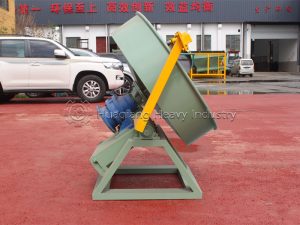
The granulation machine is the core component, with mainstream options including disc granulators, drum granulators, fertilizer roller press granulators, and new two-in-one granulators. Wet granulation equipment achieves high pelleting rates and produces rounded granules, suitable for large-scale production; dry extrusion granulation eliminates the need for water drying, maximizing the preservation of microbial activity and making it suitable for producing high-activity-of-microorganism organic fertilizers. Different models meet diverse needs in terms of granule strength, appearance, and production capacity.
Post-processing equipment ensures granule quality and mainly includes granulator rounding machines, drum screeners, coating machines, and finished product conveyors. Rounding machines produce more uniform and smooth granules, screening machines remove substandard materials, and coating machines prevent clumping and prolong fertilizer effectiveness. The entire system improves the finished product’s pass rate and marketability.
Drying and cooling equipment is crucial for stability. Low-temperature dryers and coolers strictly control temperature to prevent high temperatures from killing beneficial microorganisms, while simultaneously reducing granule moisture to prevent mold and clumping, ensuring safe storage and transportation.
Automated control systems enhance the overall level. Through PLC electrical control, frequency conversion regulation, and online monitoring, stable operation is achieved, reducing manual labor and energy consumption, making bio-organic fertilizer granulation more efficient, intelligent, and standardized.