
【FAQ】When should the roller skins of a double-roller extrusion granulator be replaced due to wear?
The roller skins of a double-roller extrusion granulator are the most expensive and easily worn parts in the entire production line. Replacing them too early wastes costs, while replacing them too late affects output and quality. When to replace them cannot be based on intuition; three indicators must be considered.
Indicator 1: Decreased particle strength. As the roller surface wears, the pits become shallower, reducing the ability to “bite” the material. The extruded cake becomes loose and porous, and the compressive strength of the particles decreases accordingly. If the particle strength sampled each shift is consistently lower than the internal control standard (organic fertilizer is usually ≥10N), it indicates that the roller skin has entered the late stage of wear. If it is not replaced at this point, the particles delivered to the customer will pulverize during transportation, and the losses from returns and claims far exceed the price of a single roller skin.
Indicator 2: Continuously declining pelleting rate. The pelleting rate of new roller skins is usually 75%~85%. As the roller surface wears, the pelleting rate gradually declines. When the pelleting rate drops below 60% and cannot be restored by adjusting the roller gap and pressure, it indicates that the roller skin has reached the end of its service life. Continued use will only increase the amount of recycled material, reducing the overall production line capacity and increasing energy consumption.
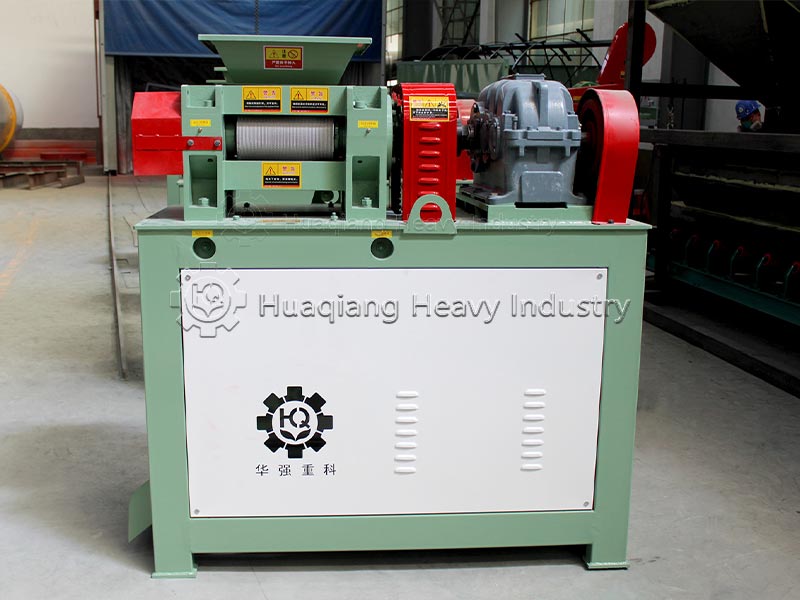
Indicator 3: Cracks or peeling appear on the roller surface. This is the most dangerous signal. If visible cracks or localized peeling appear on the roller surface, the machine must be stopped immediately and the roller skin replaced. Continued operation may cause the entire roller skin to burst, damaging the bearings and hydraulic system, with repair costs several times that of a new roller skin.
The roller skin material determines its service life. Ordinary carbon steel roller skins generally last 1-3 months, alloy steel roller skins 3-6 months, wear-resistant cast iron and ceramic roller skins 6-12 months, and hard alloy roller skins can last 12-24 months. It is recommended to use wear-resistant and corrosion-resistant alloy steel, which can improve wear resistance by more than 3 times.=
Three other factors affecting roller skin lifespan also deserve attention. Hard impurities (stones, metal fragments) mixed in the material will directly scratch the roller surface; uneven feeding will cause unilateral wear of the roller surface; excessively high material moisture content (above 15%) will accelerate roller surface corrosion. Installing a magnetic separator and vibrating screen before the feed inlet, ensuring uniform feeding, and strictly controlling material moisture are the most effective ways to extend roller life.