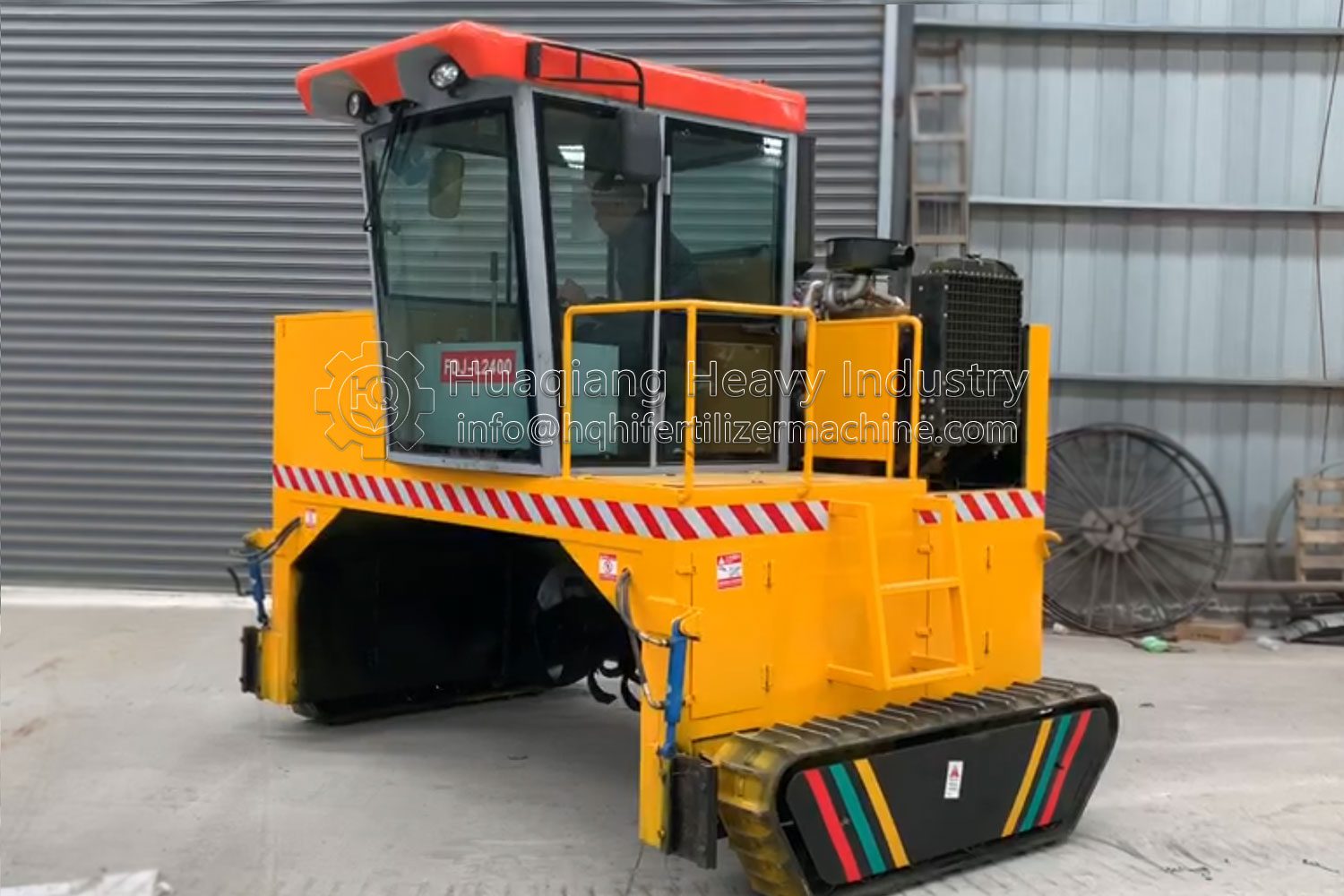
The Role of Organic Fertilizer Fermentation Compost urning Machines in Bio-organic Fertilizer Production Lines
Organic fertilizer fermentation compost turning machines are core and critical equipment in bio-organic fertilizer production lines. They are used throughout the entire raw material composting process, directly determining fermentation quality, production cycle, and finished product fertility. They are an indispensable foundational piece of equipment for the entire production line.
The core of bio-organic fertilizer lies in the survival of beneficial bacteria and the full composting of organic matter. Turning machines play four core roles: oxygen supply, temperature regulation, moisture removal, and mixing. Tank-type, disc-type, and tracked types of machines continuously turn the material, breaking up the sealed layer of the pile, supplementing air for aerobic microorganisms, and preventing the production of foul odors and harmful substances from anaerobic fermentation. Simultaneously, they can promptly dissipate the high temperatures and moisture generated during fermentation, stabilizing the material temperature within the suitable range for the microorganisms, preventing high temperatures from killing functional bacteria, and ensuring the activity of the microorganisms.
From a production rhythm perspective, turning efficiency directly affects the fermentation cycle. Manual turning is labor-intensive and produces poor uniformity. Using professional turning machines can significantly accelerate the decomposition of organic matter, shortening the composting cycle by nearly half, enabling batch continuous production, and improving site turnover efficiency and overall capacity. If the turning process is missing or malfunctions, fermentation will stall, causing downtime in the subsequent crushing, granulation, and packaging processes of the entire production line.
Regarding finished product quality, uniform turning ensures thorough integration of raw materials, microorganisms, and additives, guaranteeing consistent composting levels in each batch and preventing issues like unprocessed or partially undercooked materials. This stabilizes the organic matter and viable bacteria levels in the product. Furthermore, proper turning reduces leachate accumulation and odor diffusion, meeting environmental protection requirements.
In summary, the turning machine is the heart of the fermentation process. Its operation determines the composting effect of raw materials and connects to the entire molding and processing steps. Its operational status directly impacts production capacity, quality, cost, and environmental compliance, making it an irreplaceable core component of the bio-organic fertilizer production line.