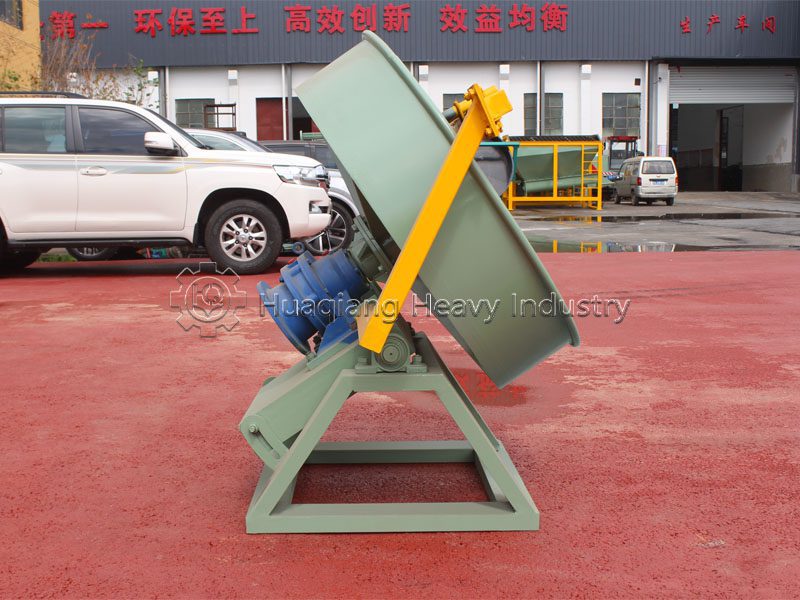
Benefits of Automated Operation of Disc Granulation Production Lines
Disc granulation production lines achieve fully automated operation, linking feeding, granulation, drying, and packaging. Compared to manual operation, this offers significant advantages, balancing production efficiency, product quality, cost control, and operational safety.
Automated bio-organic fertilizer equipment relies on frequency conversion speed regulation and a PLC system for precise control of materials, water, and temperature. Material conveying volume, disc rotation speed, and water spray volume remain stable, resulting in uniform particle size, roundness, and hardness. This significantly improves the finished product qualification rate and effectively avoids problems such as inconsistent particle size and excessive return material that occur with manual operation. Automatic temperature control during drying and cooling also protects beneficial bacteria in the bio-organic fertilizer, stabilizing product quality.
In terms of production efficiency, automated production lines can operate continuously 24 hours a day without frequent downtime and shift changes. Unit-time capacity is increased by more than 30%, and fine powder return and waste recycling are also automatically completed, further improving raw material utilization. At the same time, it significantly reduces manual labor positions, requiring only 1-2 people for the entire production line for inspection and maintenance, reducing labor costs and management expenses, resulting in lower long-term production costs.
The automated system, equipped with enclosed dust collection and interlocking protection devices, automatically responds to equipment start-up, shutdown, and fault alarms, promptly stopping the machine in case of material blockage or overload, reducing the risk of equipment damage and safety accidents. The fully enclosed conveying system minimizes dust leakage, improving the workshop working environment and reducing dust corrosion of equipment components, thus extending the overall machine’s lifespan.
Furthermore, the automated equipment is easy to operate, with parameters that can be saved and recalled with a single click. Changing formulas and adjusting specifications is convenient and efficient, adaptable to the production of various fertilizer types, and facilitates daily management and capacity control, making it the mainstream choice for large-scale organic fertilizer production.