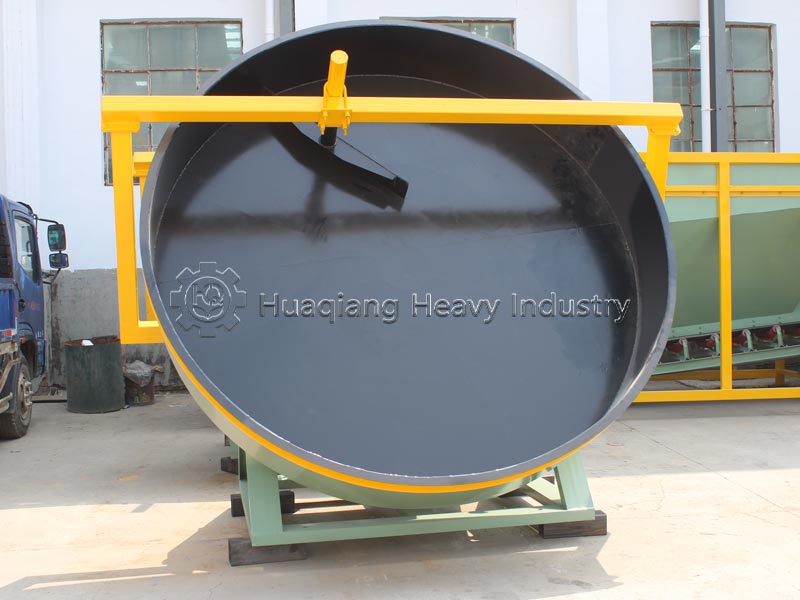
How to Ensure Uniform and Stable Feeding for Organic Fertilizer Disk Granulator Machines
Maintaining a uniform and stable feed rate is crucial for ensuring consistent granulation, stable operational loads, and continuous production in organic fertilizer disk granulator machiens. This objective can be achieved through measures involving feeding equipment, material pretreatment, operational controls, and on-site management.
Prioritize the installation of stable feeding equipment. Install a screw conveyor, a quantitative belt feeder, or a variable-frequency hopper upstream of the disc granulator to replace direct manual feeding. By utilizing variable-frequency control, a continuous and constant feed rate can be achieved, thereby preventing the erratic fluctuations in material volume within the granulation pan that result from inconsistent feeding. Additionally, equip the storage hopper with an arch-breaking device to prevent material bridging and flow interruptions, ensuring a smooth and uninterrupted discharge.
Conduct thorough material pretreatment. Raw materials must undergo crushing and screening to remove large lumps, hard aggregates, and impurities, thereby preventing blockages at the discharge port. Carefully control the material’s moisture content and bulk density to avoid issues such as excessive stickiness (when too wet) or excessive dust generation (when too dry); this ensures consistent material flowability, which facilitates stable conveyance. For highly viscous materials, the appropriate addition of inert fillers can help reduce the likelihood of clogging.
Standardize operations and flow control. Based on the size and rotational speed of the granulation disc, as well as the observed granulation status, pre-set an appropriate feed rate; during the operation of the bio-organic fertilizer production line, avoid making frequent or drastic adjustments to this rate. Synchronize the water spray rate with the material feed rate, making minor adjustments to the water volume in tandem with the material flow to prevent feeding disruptions caused by sudden shifts in material moisture levels. Designate a specific operator to monitor the thickness of the material layer within the granulation pan; an excessively thick layer risks overloading the equipment, while an excessively thin layer results in low granulation efficiency.
By implementing stable feeding equipment, standardized material pretreatment, precise flow control, and routine maintenance, a continuous and uniform feed rate can be successfully achieved. This ensures smoother operation of the disc granulator and results in granules of consistent size, while simultaneously reducing equipment load and minimizing the risk of mechanical failure.