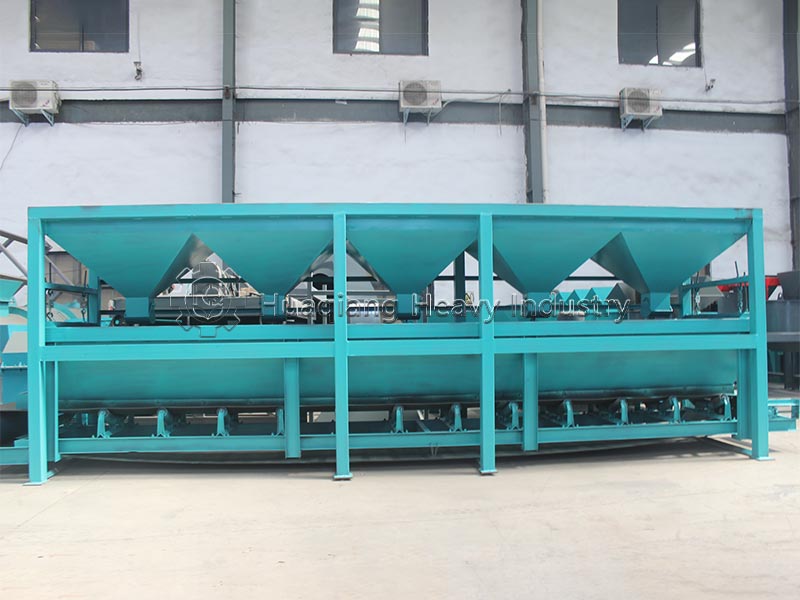
Solutions for Material Clogging in Multiple Silos Single Weigh Static Batching Systems
Material clogging in multiple silos single weigh static batching systems is primarily caused by material agglomeration, excessive moisture content, flawed structural design, or poor discharge flow. This issue can be comprehensively resolved through a multi-faceted approach involving material pretreatment, hopper optimization, improvements to feeding mechanisms, control logic adjustments, and routine maintenance.
First, strictly control the condition of raw materials; specifically, maintain the material moisture content within the 8%–12% range. Excessively wet materials tend to adhere to hopper walls and clump together, necessitating prior air-drying or mechanical drying. Agglomerated raw materials should undergo crushing to ensure uniform particle size, thereby preventing large lumps from jamming the discharge outlet. Furthermore, impurities such as wire scraps and stones must be removed prior to batching to prevent them from jamming the screw conveyor or gate valves.
Optimize the hopper structure to prevent arching and bridging. Install smooth liners or anti-stick coatings on the inner walls of the hopper to minimize material adhesion. Increase the hopper cone angle to over 60° to eliminate dead zones where material can accumulate; additionally, equip the system with pneumatic arch-breaking devices, vibrators, or mechanical agitators to actively break up arches before clogging occurs, thereby ensuring continuous discharge. The discharge outlet size should be appropriately enlarged to prevent congestion caused by an overly narrow opening.
Improve the feeding mechanism to enhance material flowability. Select screw conveyors with a large pitch and wide blades based on the specific characteristics of the material; for viscous materials, consider installing crushing blades. The gate valve opening should be adjustable to prevent sudden, excessive material surges that could lead to blockages. Ensure a smooth transition between the screw conveyor and the weighing hopper to minimize drop heights and eliminate ledges where material can accumulate and jam.
Strengthen routine maintenance protocols by regularly cleaning accumulated material from the hopper interior, screw conveyor, and weighing hopper to prevent hardening and agglomeration. Periodically inspect the operational status of arch-breaking devices and vibration motors, and promptly replace any aging components. Regularly lubricate transmission parts to ensure the screw conveyor operates smoothly. By implementing these measures, the frequency of material clogging can be significantly reduced, thereby ensuring the stable and continuous operation of the batching system.