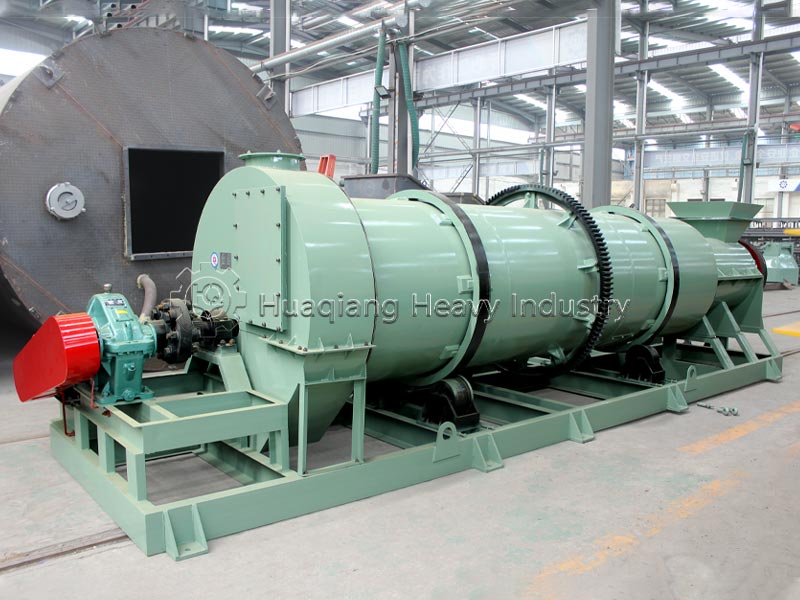
Selection of Cutting Heads for New Type Two in One Organic Fertilizer Granulators
When purchasing cutting heads for new type two in one organic fertilizer granulators, it is necessary to comprehensively consider the type of raw material, material moisture content, production load, and service life. Matching the machine model ensures optimal granulation results and reduces malfunctions and losses.
First, select the type based on the characteristics of the raw material. For high-fiber raw materials such as straw, sawdust, and vines, prioritize high-powered shearing cutting heads with sharp teeth. The sharp teeth quickly cut long fibers, preventing entanglement and clogging, and improving agglomeration efficiency. For high-moisture, sticky materials such as chicken manure, pig manure, and sludge, choose curved hook-shaped cutting heads, which have a built-in pushing and scraping effect, effectively cleaning accumulated material on the cylinder wall and preventing material from sticking and clumping. For ordinary, well-rotted powdery organic fertilizer, general-purpose straight cutting heads are sufficient, offering better cost-effectiveness.
Second, prioritize the cutting head material. For daily production, high-manganese alloy steel cutting heads are recommended. They have good toughness, wear resistance, and are compatible with most organic fertilizer raw materials, making them economical and practical. For processing coarse fiber and sandy materials, chromium-molybdenum alloy wear-resistant cutter heads are selected. These offer higher hardness, stronger impact resistance, and are less prone to deformation and breakage, significantly extending their service life. For high-humidity and highly corrosive manure raw materials, cutter heads made of corrosion-resistant and wear-resistant materials can be used to delay rust damage.
Furthermore, matching specifications and installation parameters is crucial. Strictly adhere to the equipment model when selecting cutter heads of the corresponding size to ensure a proper fit. Control the gap between the cutter head and the cylinder wall to 5 to 8 mm. Too large a gap results in insufficient shearing force, while too small a gap can easily cause scratching damage. Prioritize one-piece molded, thickened, and reinforced cutter heads to prevent bending and breakage of thin cutter heads under prolonged stress.
Finally, consider the production conditions. High-yield continuous production lines should use thickened and reinforced wear-resistant cutter heads to reduce downtime for replacement. Small workshops with low-load production can use economical cutter heads. Always use original equipment manufacturer (OEM) cutter heads for precise dimensions, secure assembly, and more stable operation. This ensures uniform bio-organic fertilizer granulation and reduces equipment maintenance costs.