
NPK Fertilizer Production Line: Granulation Process and Sustainability Characteristics
The characteristics of NPK fertilizer production lines in the production of compound fertilizers are reflected not only in their efficient granulation process but also in their sustainability and overall efficiency. Granulation is the core process of the production line, involving various methods to ensure the quality and applicability of the fertilizer granules. Extrusion granulation technology eliminates the need for drying and cooling, resulting in a high granulation rate and strong granule strength, making it suitable for the production of low-concentration compound fertilizers. Tower granulation optimizes slurry emulsification, improves fluidity, prevents equipment clogging, and ensures uniform granule distribution. The agglomeration method is known for its simple process and low investment, allowing for quick setup. While the granules are rough, they are durable and suitable for storage, making this method ideal for small and medium-sized enterprises. These granulation characteristics directly affect the solubility and slow-release properties of the fertilizer, reducing losses during field application and improving crop absorption efficiency.
The drying and cooling stages are a testament to the energy efficiency and environmental friendliness of the NPK fertilizer production line. Equipment such as drum dryers precisely controls granule moisture and size, and supports the addition of colorants to improve product appearance. Energy recovery systems utilize waste heat to preheat raw materials, significantly reducing energy consumption. Although electricity consumption is a common challenge, integrated wastewater treatment and dust removal devices ensure that the production line meets green standards. For example, in a 5000-ton per year organic fertilizer project, these characteristics ensure low-emission production, supporting sustainable agriculture.
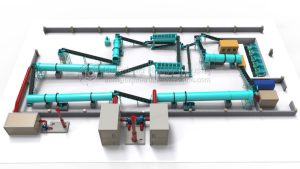
Automation control is key to the sustainability of the NPK fertilizer production line. Through PLC systems and AI monitoring, the entire process, from metering and mixing to packaging, is intelligently managed, reducing human intervention and improving production consistency. Case studies from European factories show that high capacity combined with flexibility not only increases output but also optimizes resource utilization. The production line also supports the addition of organic matter or microorganisms to create bio-compound fertilizers, further promoting soil health.
Overall production efficiency and sustainability are reflections of the comprehensive characteristics of the NPK fertilizer production line. The entire process, from raw material preparation to final packaging, requires meticulous management and control. Characteristics include low cost, high production flexibility, and optimization of transportation and site selection, such as locating near industrial areas to reduce logistics costs. Future trends point towards intelligent and green transformation, such as the introduction of AI predictive maintenance to extend equipment life and reduce downtime. At the same time, the production line emphasizes waste minimization, such as dust recovery and wastewater recycling, reducing its environmental footprint.
In the context of global agriculture, these characteristics of the NPK fertilizer production line contribute to food security. Through flexible formulation and efficient processes, the production line adapts to the needs of different soils and crops, such as high-nitrogen fertilizers for rice or high-potassium fertilizers for fruit trees. The challenges lie in fluctuating raw material prices and environmental regulations, but these issues are being gradually addressed through technological innovation. In short, the NPK fertilizer production line, with its granulation process and sustainable characteristics, is driving the fertilizer industry towards efficiency and environmental friendliness, providing reliable support for modern agriculture.