Key Considerations During the Bio Organic Fertilizer Granulation
Bio-organic fertilizers contain beneficial live microorganisms; therefore, the bio-organic fertilizer granulation process must not only ensure a high granulation rate and a desirable physical appearance but, more importantly, preserve the viability of the microbial strains. In the production of bio-organic fertilizers, particular attention should be paid to the following points:
First, strictly control temperature to protect the live microorganisms. Microorganisms are sensitive to high temperatures; thus, frictional heat generated during granulation must not be allowed to rise excessively, and drying temperatures should ideally be kept below 60°C. Rapid drying at high temperatures is strictly prohibited, as it leads to the mass death of microbial strains, causing the product to fail to meet bio-organic fertilizer standards and resulting in diminished fertilizer efficacy.
Second, carefully manage the moisture content and fineness of the raw materials. Raw materials must be fully composted and pulverized, typically reaching a fineness of 60 to 80 mesh. For wet granulation methods, moisture content should be controlled between 40% and 50%; for dry extrusion methods, it should be between 20% and 30%. If the moisture content is too high, it can lead to material sticking to the machinery, material recirculation issues, and secondary fermentation; conversely, if it is too low, granulation becomes difficult, resulting in excessive powder residue and a low yield of finished product.
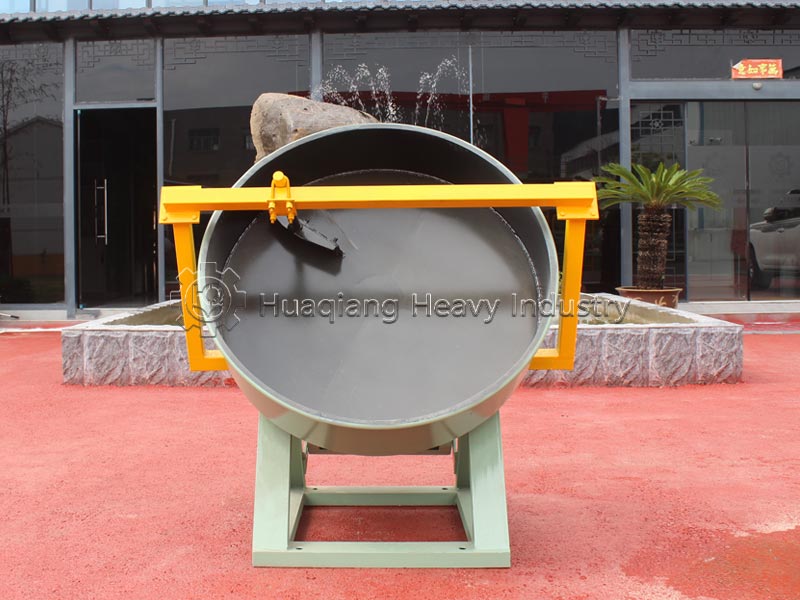
Third, select an appropriate granulation method. Priority should be given to disc granulators, rotary drum granulators, and double-roller dry extrusion granulators, as these methods generate minimal friction and result in lower temperature increases. Avoid—or minimize the use of—equipment that employs strong extrusion and generates significant heat; if such equipment is necessary, apply only gentle rounding/polishing treatments and avoid repetitive processing to prevent the destruction of live microorganisms.
Fourth, pay close attention to the sequence of microbial addition. Ideally, microbial strains should be added at a later stage—preferably applied as a coating after the product has undergone cooling and screening—rather than being premixed with the raw materials and subjected to high-temperature processing. This strategy significantly enhances the survival rate of the live microorganisms.
Fifth, minimize material recirculation and enhance granule strength. Incorporate appropriate natural binders—such as humic acid—to ensure the granules are robust and resistant to pulverization. After granulation, screen and cool the product promptly; avoid piling up hot material, as this can lead to internal heat accumulation that kills the microorganisms, or cause moisture condensation that results in caking.
Finally, maintain rigorous equipment cleaning and site ventilation. Regularly remove accumulated material to prevent mold growth. Ensure that the finished product has cooled completely before packaging to prevent gas buildup or mold growth within the bags, thereby extending the product’s shelf life.