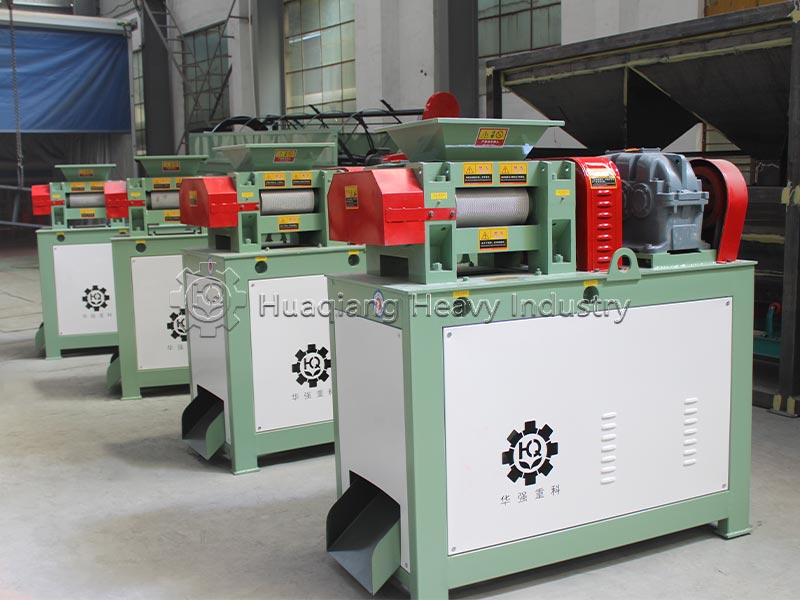
How to Resolve Issues with Loose Granules in Double Roller Press Granulators
If your double roller press granulator is producing loose, poorly formed, or low-strength granules, follow these four steps for a quick and effective solution—typically resolving the issue on the first attempt:
- Increase Forming Pressure
Insufficient pressure is the most common culprit. Adjust the hydraulic system pressure upward to ensure the material is thoroughly compacted; additionally, inspect the hydraulic oil, cylinders, and overflow valves to guarantee stable pressure without leakage.
- Precisely Control Material Moisture Content
If the moisture level is too low, the material will not bind together; if it is too high, it tends to stick to the rollers. For fertilizers, the optimal range is typically 2%–5%. If the material is too dry, lightly mist it to increase moisture; if it is too wet, allow it to air-dry or ventilate it appropriately to ensure the dry powder remains in its optimal state for processing.
- Repair or Replace Rollers
Worn-out rollers—characterized by a smooth surface lacking grooves or insufficient hardness—will result in poor material gripping and inadequate compaction. You may need to repair the roller shells via hardfacing or replace them with chrome-molybdenum alloy rollers to ensure the surface patterns remain distinct and the hardness meets the required standards.
- Ensure Stable and Uniform Feeding
Inconsistent feeding rates (surging or slowing) or uneven material distribution will lead to fluctuating pressure, resulting in loose granules. Adjust the speed of the screw feeder to ensure a continuous and uniform supply of material; also, inspect the hopper for bridging issues to prevent material flow interruptions.
Quick Tip: Variations in raw material ratios, insufficient powder fineness, or high levels of sand and impurities can also negatively impact granule formation. It is recommended to first remove iron and other impurities, and to ensure the powder fineness meets the necessary specifications.