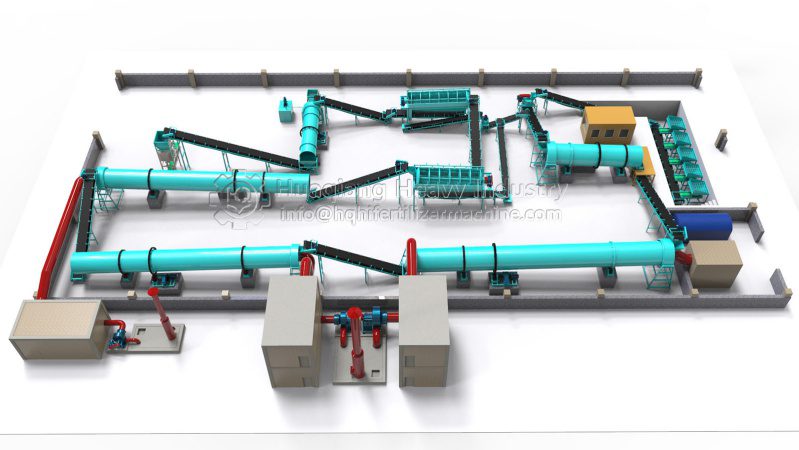
Comparison of Environmental Protection Requirements: NPK Blending Fertilizer vs. Bio-organic Fertilizer Production Lines
NPK blending fertilizer production lines entail minimal environmental requirements, a straightforward approval process, and virtually no risk of disturbing the local community. These lines involve only physical batching and mixing—without fermentation, drying, or biochemical reactions—generating only small amounts of fertilizer dust, with no foul odors or industrial wastewater. Environmental compliance requires only the installation of bag-type dust collectors and measures to enclose the workshop and protect raw materials from rain; there is no need for impermeable flooring, wastewater holding tanks, or odor control systems. The facility generates only minor amounts of domestic sewage, and standard paved flooring suffices. The environmental impact assessment (EIA) process is simple, routine inspections are lenient, there is no risk of odor-related complaints, and operation and maintenance costs are extremely low.
In contrast, bio-organic fertilizer production lines face strict environmental controls, high investment costs, and numerous regulatory constraints. A primary challenge is that the fermentation of raw materials—such as livestock manure and crop straw—generates malodorous gases like ammonia and hydrogen sulfide; consequently, fully enclosed negative-pressure fermentation workshops and biological deodorization systems are mandatory, alongside strict exhaust emission standards. Furthermore, the stockpiling and fermentation of manure generate high-concentration leachate, necessitating double-layer impermeable flooring in raw material and fermentation zones, as well as collection tanks to ensure total wastewater recycling and prevent leakage-induced pollution. Additionally, the crushing and drying stages generate dust and flue gas, requiring multiple dust removal systems. Site selection must ensure distance from residential areas and water sources; the EIA process is complex, discharge monitoring requirements are extensive, and environmental maintenance costs are high. Operators must maintain ongoing records of equipment operation and manure disposal, as odor nuisances and failure to meet impermeability standards are the leading causes for mandatory rectification or facility shutdowns.