Common Problems in Roller Press Granulator Production Lines
In industrial production, roller press granulator production lines are susceptible to various problems affecting productivity and granule quality due to factors such as raw material characteristics, equipment parameters, and operating procedures. The specific common problems are as follows:
1. Low Granule Formation Rate
This is one of the most critical common problems in the production line. The main causes include unreasonable raw material moisture content – too high moisture content easily causes the material to stick to the roller surface, while too low moisture content prevents the formation of a stable material layer; in addition, poor raw material mixing uniformity, lack of binding components, or unbalanced additive ratios will also significantly reduce the formation rate.
2. Abnormal Equipment Noise and Vibration
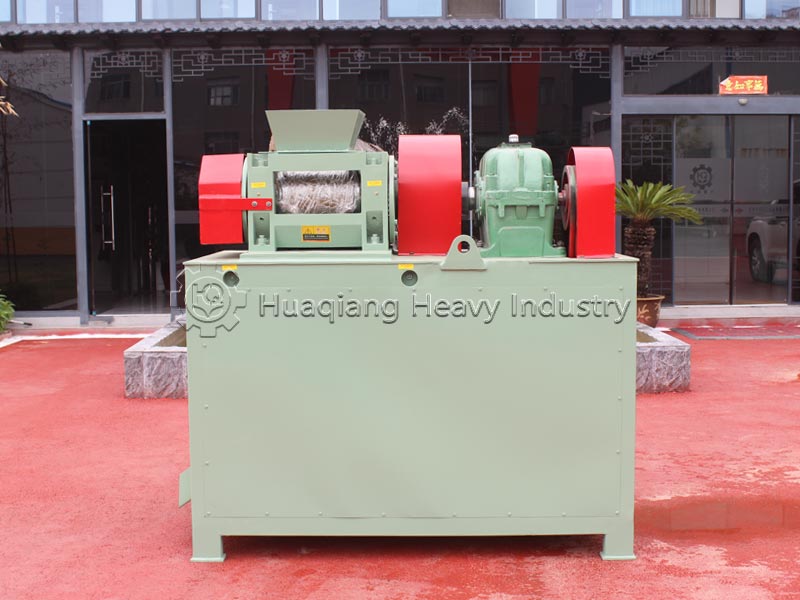
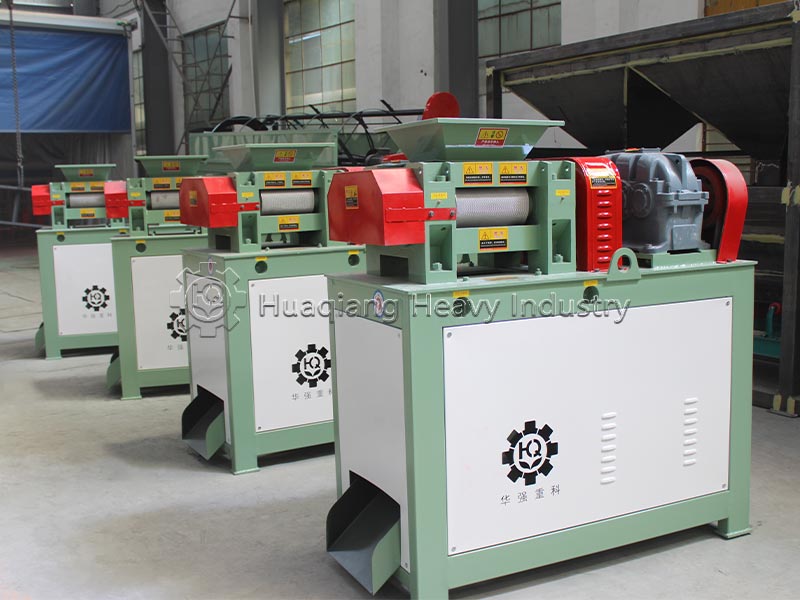
Abnormal noise or severe vibration in the double roller press granulator during the production process is mostly due to uneven roller wear, grooves or chipping on the roller surface, resulting in unbalanced force during material extrusion; if the feed rate fluctuates, causing instantaneous overload of the roller press, it will also cause vibration and abnormal noise.
4. Rapid Roller Surface Wear
As a core wear part, if hard impurities (such as stones and metal fragments) are mixed into the raw materials, it will directly scratch the roller surface; long-term processing of high-hardness, high-abrasion materials without timely adjustment of extrusion parameters will accelerate roller surface wear; at the same time, insufficient hardness of the roller surface material and the lack of wear-resistant coating treatment are also important factors contributing to accelerated wear.
5. Material Blockage Problems
Material blockage at the feed port, hopper, or conveying link is often due to excessive moisture content in the raw materials leading to sticking and blockage; the feeding speed exceeding the equipment’s processing capacity causes material accumulation at the feed port; it may also be due to material accumulation in the internal channels of the equipment that is not cleaned in time, or a malfunction of the mixing device, resulting in uneven material mixing and the formation of lumps.