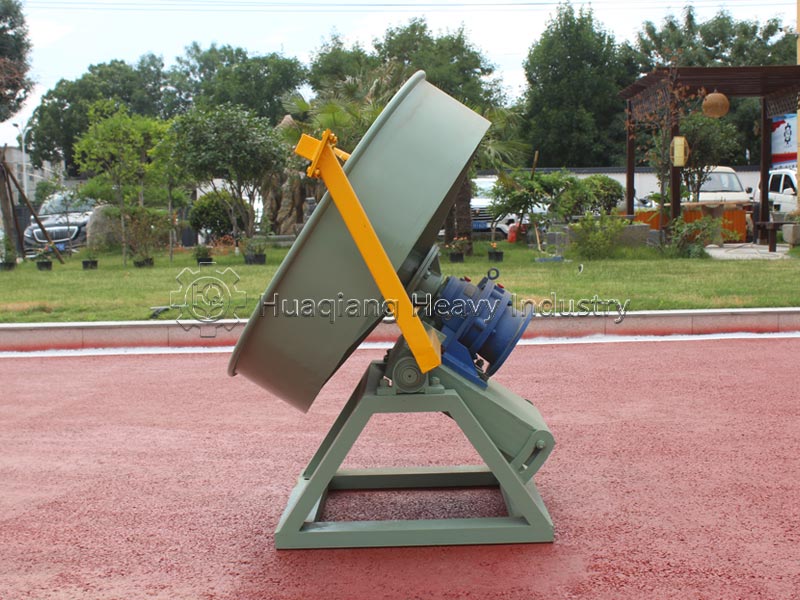
The Requirements for Material Viscosity in Disc Granulation Production Lines
The requirements for material viscosity in disc granulation production lines are quite strict, with the core issue being the control of moisture content within a suitable range—too dry and it’s difficult to form pellets, too wet and it will severely stick to the disc.
- Optimal Moisture Content: 32%-38%
This is the critical range for ensuring pellet formation. At this moisture level, particles can naturally adhere and roll together due to the surface tension of water. If the moisture content is below 25%, the material is too loose and cannot form core masterbatches, resulting in a significant decrease in pellet formation rate.
- Remedies for Insufficient Viscosity: Adding Binders
When the raw material itself has poor viscosity (such as pure straw powder or certain minerals), it needs to be adjusted manually. There are two common methods: one is to add fine recycled powder (screened out defective products), using its rough surface as a skeleton to promote agglomeration; the other is to add binders such as bentonite or clay to improve the plasticity of the material.
- Hazards of Excessively High Viscosity: Moisture > 40%
If the material is too wet or has too high a mud content, it will cause “sticking to the disc” accidents. Wet material will stick tightly to the bottom and sides of the disc, accumulating and forming large clumps. This can cause minor issues like difficulty rotating the disc and a sudden increase in current, or even cause the bio-organic fertilizer equipment to seize up and shut down.
- Quick Judgment Techniques During production, the “hand-kneading” method can be used for a rough judgment: Squeeze the material into a ball; if it easily crumbles upon slight contact, the viscosity is suitable. If it cannot be clumped at all, it is too dry. If water drips from between your fingers or is very sticky after squeezing, it is too wet.
In short, the key to operating disc granulation is to accurately control the material’s moisture content between 32% and 38%, and to compensate for insufficient natural viscosity by adding recycled material or binders.