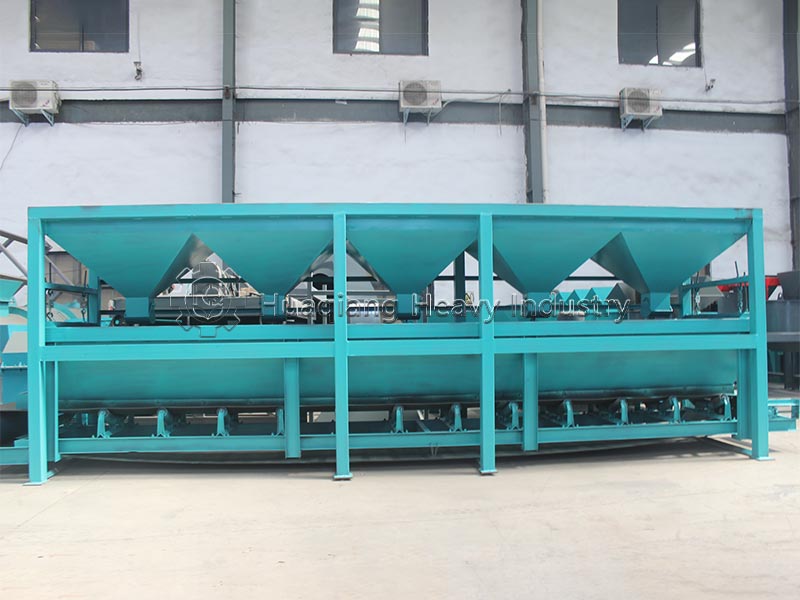
Precautions for Feeding in Multiple Silos Single Weigh Static Batching Systems
The stability of feeding in a mltiple silos single weigh satic batching systems directly determines batching accuracy, production efficiency, and particle quality. Key aspects to monitor during the feeding process include material condition, feeding sequence, speed control, sealing against blockages, and metering stability.
Raw materials must be dry, loose, and free of lumps, with moisture content controlled within a reasonable range to prevent dampness, adhesion, and bridging. Lumpy raw materials must be pre-crushed and sieved to prevent clogging of the discharge port and screw, ensuring smooth feeding. The amount of raw material in the silos should be maintained at an appropriate level, neither too full nor too low, to avoid uneven pressure causing inconsistent feeding speeds.
Strictly follow the formula feeding sequence, generally adding larger quantities of raw materials first, followed by smaller quantities, to avoid mutual interference. Use a combination of fast and slow feeding speeds; fast feeding improves efficiency, while switching to slow feeding when approaching the set value reduces impulse error and improves accuracy. Rapid feeding in one go is strictly prohibited to prevent over-weighing.
During the feeding process, closely observe the operation of the screw or vibrating feeder. Immediately stop the machine and inspect it if abnormal noises, jamming, or material interruption occur. Promptly clean any accumulated or sticky material at the hopper opening and gate to prevent residue from causing mixing and inaccurate metering. Ensure the hopper is properly sealed to prevent dust leakage and moisture absorption.
Keep the weighing hopper in a free, static state, avoiding rigid contact or stress with other equipment to prevent sensor signal distortion. Allow a stabilization delay after each batch of feeding to allow the weight to stabilize before taking a reading, eliminating the influence of vibration. Regularly calibrate the weighing sensor to ensure the error is within the allowable range.
Control the amount of material dispensed per batch, avoiding overloading and underloading to maintain stable equipment operation. When switching formulas, first empty the system of any residual material to avoid cross-contamination between different formulas.