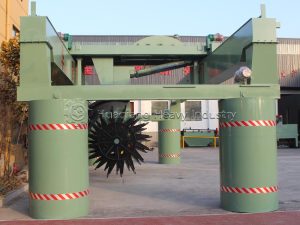
Reasons for the Diversified Development of NPK Blending Machine
The diversified development of NPK blending Machine is driven by multiple factors, including differentiated market demand, agricultural development upgrades, innovation in raw materials and fertilizer types, and the diversification of production entities. This, coupled with technological advancements and industry competition, has broken the traditional pattern of equipment homogeneity, leading to a multi-dimensional adaptive development trend. The specific reasons can be summarized in five aspects:
- Stratified agricultural production needs: Large-scale field planting requires high-capacity, high-efficiency, and general-purpose equipment, while cash crops and protected agriculture demand strict requirements for ingredient accuracy and customized formulations. Soil testing and formula fertilization require mobile, portable, and small-batch quick-change models. The differentiated needs of different planting scenarios are driving the graded development of equipment.
- Diversified fertilizer types and raw material systems: Blending fertilizers have expanded from traditional nitrogen, phosphorus, and potassium granules to powders, water-soluble types, and slow/controlled-release types, requiring the addition of trace elements, microbial agents, and humic acid. Raw materials encompass various types, including high and low density, hygroscopic, and corrosive materials, requiring equipment to adapt to different raw material characteristics and fertilizer production processes.
- Differentiated production scales of production entities: Large agricultural enterprises and ten-thousand-ton NPK blending fertilizer production lines require continuous and intelligent integrated equipment. Small and medium-sized processing plants need to balance capacity and cost-effectiveness, while family farms and fertilizer blending stations require small, simple, and low-cost models. The production capacity and budget of different-sized entities have driven the development of a full spectrum of equipment, from large to small.
- Agricultural development upgrades and policy guidance: The development of precision agriculture and green agriculture requires equipment to improve ingredient/mixing accuracy and enable production data traceability; environmental protection policies impose strict standards on dust and energy consumption, forcing equipment upgrades in areas such as enclosed dust collection, variable frequency energy saving, and corrosion resistance. Simultaneously, digital transformation is driving the development of intelligent control equipment.
- Technological advancements and industry competition: Continuous upgrades in technologies such as ingredient metering, mixing, and intelligent control provide support for equipment function integration and accuracy improvement; intensified industry competition has prompted manufacturers to move beyond homogeneity, focusing on innovation in niche areas and launching multi-functional, scenario-specific customized equipment to gain market share through differentiated advantages.