How does a disc granulator work?
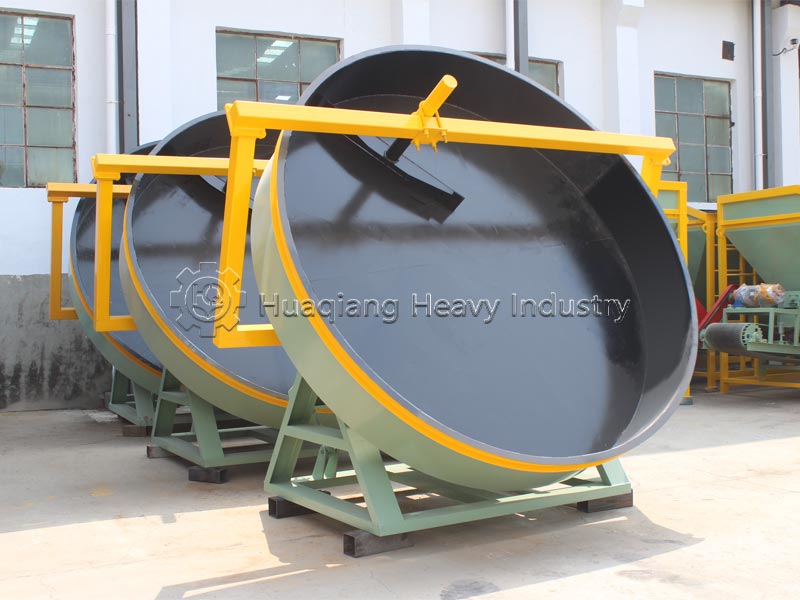
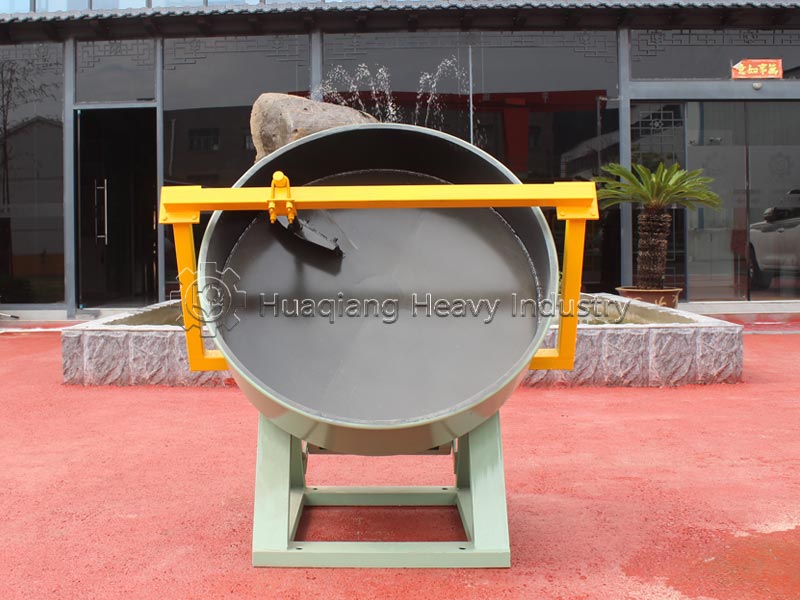
The disc granulator is a core piece of equipment in the production of organic fertilizers and blended fertilizers. Its working principle relies on a tilted, rotating disc structure, achieving efficient granulation through the synergistic effect of mechanical force and material adhesion. After starting the bio disk organic fertilizer machine, the operator can flexibly adjust the disc’s tilt angle and rotation speed according to the production requirements of the organic fertilizer or NPK blending fertilizer production line. The proportioned organic fertilizer raw materials, blended fertilizer base materials, or compound fertilizer raw materials are then fed into the disc along with a quantitative amount of binder (such as water, bentonite, etc.).
As the disc rotates, centrifugal force, friction, and gravity collectively drive the materials inside the disc in high-speed circular motion and reciprocating rolling. The fine raw material particles adhere to each other during continuous collision and compression, gradually forming initial small granules. As the disc continues to rotate, these small granules continuously absorb surrounding fine powder as they roll, gradually increasing in size like a snowball. At the same time, they are continuously compacted under the action of centrifugal force, improving both the roundness and density of the granules.
During the granulation process, granules that reach the preset particle size standard are automatically discharged from the discharge port at the edge of the disc due to gravity. Smaller, substandard granules remain in the disc to continue rolling, achieving particle size classification and screening. By precisely controlling the disc’s tilt angle, rotation speed, and the amount of binder added, operators can flexibly control the size, strength, and roundness of the granules, meeting the granulation specifications of different fertilizer products such as organic fertilizers and blended fertilizers, and adapting to diverse agricultural fertilization scenarios.