
【FAQ】Why can’t equipment from BB fertilizer production lines and organic fertilizer fermentation lines be used interchangeably?
In fertilizer manufacturing, BB fertilizer (bulk blend fertilizer) production lines and organic fertilizer fermentation lines are often located within the same facility, yet their operational logic is almost diametrically opposed: one relies on “dry physical mixing,” while the other involves “wet aerobic fermentation.” Mixing the equipment between these two lines can lead to reduced efficiency at best, or the scrapping of an entire batch at worst.
The core principle of a BB fertilizer production line is “dry mixing and precise proportioning.” A complete BB fertilizer production line consists of a series of components: raw material silos, a metering system, mixing equipment, and a packaging machine. The raw materials—such as urea, ammonium phosphate, and potassium chloride—are finished granules with a moisture content typically below 1%. The BB fertilizer mixer utilizes a twin-shaft paddle structure where the shafts rotate in opposite directions, creating a three-dimensional tumbling motion within the chamber; this results in a mixing time of 2–5 minutes, a coefficient of variation (CV) for uniformity of ≤5%, and a granule breakage rate controlled to within 0.5%. The critical factor for accuracy in the entire line is not the mixer itself, but the multiple-silo single-weigh static batching system. In this system, raw materials are discharged sequentially into a single weigh hopper; static weighing occurs for each material before they are conveyed together. This method eliminates interference from conveyor belt speed fluctuations, allowing the batching error to be controlled within ±0.2%. The materials in this line are dry and granular, so the equipment must preserve granule integrity and prevent segregation.
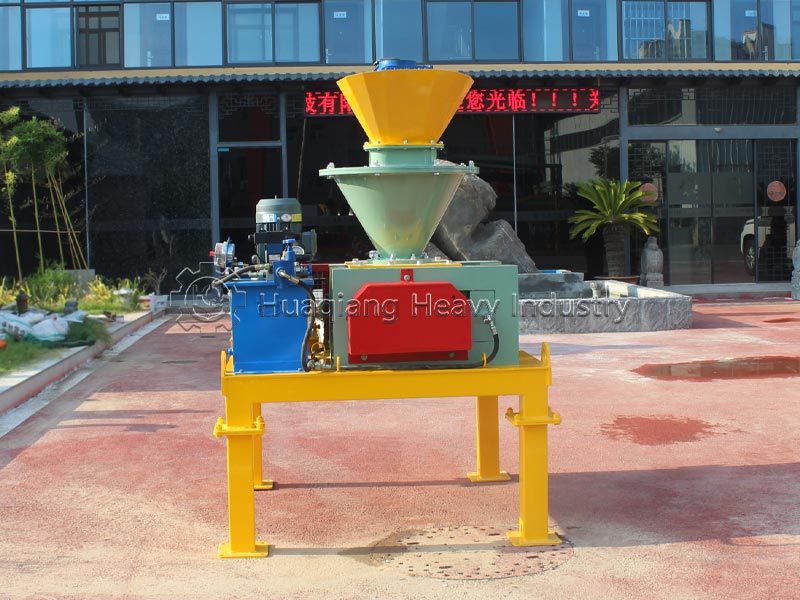
The core principle of an organic fertilizer fermentation line is “wet turning and sufficient oxygenation.” The raw materials—such as livestock manure and crop straw—have a moisture content exceeding 60% and are characterized by high viscosity and fiber content. The choice of fermentation turning equipment depends on the specific fermentation method: the hydraulic compost turning machine features hydraulic drive, deep turning capability, and robust overload protection, making it suitable for trough-style fermentation; the windrow compost turning machine uses crawler tracks for excellent terrain adaptability, making it ideal for windrow fermentation; the large-wheel compost turning machine boasts a large turning wheel diameter and a daily processing capacity of hundreds of tons per unit, suiting it for large-scale production; and the term “fermentation compost turning machine” serves as a general category encompassing all the aforementioned models. The depth, frequency, and uniformity of windrow turning directly determine the fermentation cycle; if turning is inadequate, the bottom of the pile remains oxygen-deprived for extended periods, dragging the fermentation process out from 15 days to 60 days and causing significant nitrogen loss through volatilization.
Why can’t the equipment for these two lines be used interchangeably? BB fertilizer mixers cannot handle wet materials—wet organic fertilizer wraps around the twin shafts and clogs the discharge outlet, making uniform mixing impossible. Conversely, windrow turners are unsuitable for BB fertilizer—the turning mechanism crushes the granules, generating excessive fines and exacerbating segregation. The batching systems differ as well: BB fertilizer requires high-precision static batching, whereas organic fertilizer typically undergoes only rough mixing prior to fermentation. Drying requirements are diametrically opposed: BB fertilizer requires no drying, while granulated organic fertilizer must be dried; furthermore, the drying temperature for bio-organic fertilizer must not exceed 60°C, or the beneficial bacteria will suffer massive die-off.