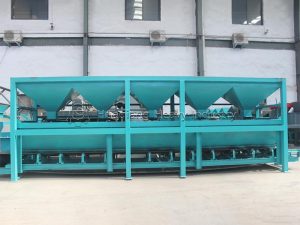
Key Points for Preventing Material Blockage in Multiple Silos Single Weigh Static Automatic Batching Systems
To ensure stable operation and completely prevent material blockage in multiple silos single weigh static automatic batching systems, comprehensive control is needed across multiple aspects, including silo structure, discharge control, material pretreatment, and operation and maintenance. This ensures smooth material feeding, accurate metering, and continuous production.
Silo design is fundamental to preventing blockages. The silo angle should meet the material flowability requirements, generally not less than 60°. The inner wall should be smooth and flat, using stainless steel or polished sheets to reduce material adhesion. For silos prone to blockage, anti-bridging devices, pneumatic flow-aiding cushions, or vibrating motors can be added to prevent material arching and bridging. The discharge port size should not be too small; it should be selected appropriately based on the material fineness and moisture content to prevent localized congestion.
Material pretreatment is crucial. Raw materials must be crushed and screened to control fineness and moisture content, preventing agglomeration, clumping, and long fiber entanglement. Foreign objects such as stones, plastics, and wires must be strictly prohibited from being mixed in to prevent them from getting stuck at the discharge port or unloading mechanism. Materials with high moisture content should be dried or pre-treated in advance to reduce the probability of material sticking to the walls and clogging.
The discharge and control methods should be scientific. Utilize variable frequency speed control and low-flow start-up to avoid excessive instantaneous discharge that could cause hopper blockage. Prioritize the use of screw discharge or star-shaped unloaders for uniform and stable discharge, reducing impact. The system should be equipped with material level monitoring and overload protection; in case of poor discharge, the flow aid device should be automatically triggered to mitigate the risk of blockage.
Daily operation and maintenance are crucial. Regularly clean the inner walls of the hopper, the discharge port, and the conveying channel to prevent hardening and clumping. Check the arch-breaking and flow aid devices for proper functioning, and ensure there are no air leaks in the air lines or abnormal noises from the motor. Perform a no-load test run before each shift to confirm smooth material discharge before engaging automatic batching.
By optimizing the structure, standardizing materials, implementing precise control, and ensuring timely maintenance, problems such as bridging, sticking to the walls, and material jamming can be fundamentally reduced. This ensures that the multi-bin single-weighing static automatic batching system operates without blockages or downtime, maintaining accurate metering and guaranteeing the efficient and stable operation of the bio-organic fertilizer equipment.