
The Role and Operating Principle of the Fertilizer Granulator in an NPK Fertilizer Production Line
The fertilizer granulator is the core machine of an NPK fertilizer production line, undertaking the crucial transformation from powdered raw materials to granular fertilizer, directly determining the granule appearance, strength, and yield.
In an NPK fertilizer production line, the fertilizer granulator primarily relies on mechanical force and binding action to agglomerate materials into granules. Taking a commonly used rotary drum granulator as an example, after the material enters the drum, it is continuously tumbled under the combined action of rotation, tilting, and hot air, gradually agglomerating the powder into uniformly sized granules. The entire process requires a stable feed rate, appropriate binder dosage, and precise temperature control.
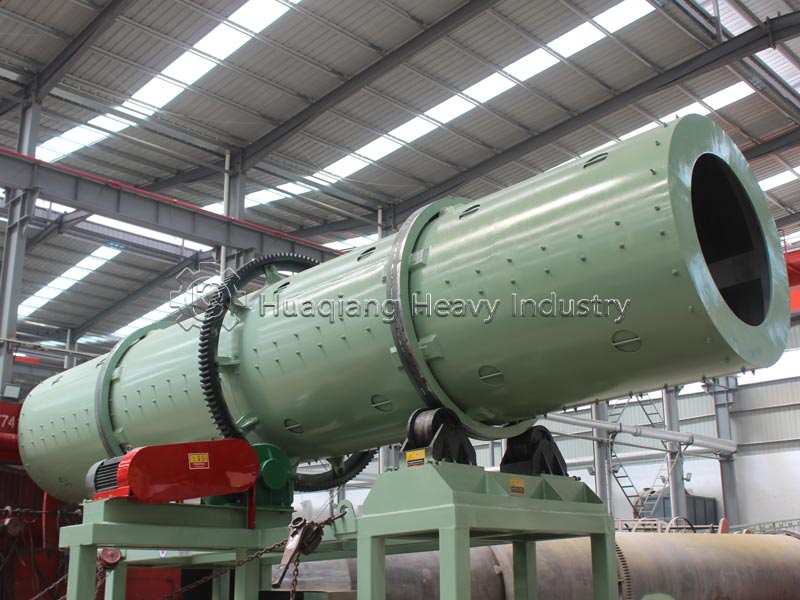
The operating status of the fertilizer granulator directly affects the efficiency of the entire NPK fertilizer production line. Excessive granulator speed can easily lead to smaller granules, while excessively slow speed can easily cause agglomeration. Uneven feeding will result in inconsistent granule size, and uneven binder spraying will reduce the granulation rate.
To ensure stable production, NPK fertilizer production lines are typically equipped with mixers, dryers, coolers, screening machines, and other equipment, forming a continuous production line with the fertilizer granulator. The stable operation of the fertilizer granulator is a crucial foundation for achieving high output, high quality, and low failure rate in NPK fertilizer production lines, and is also key for enterprises to improve capacity and product quality.