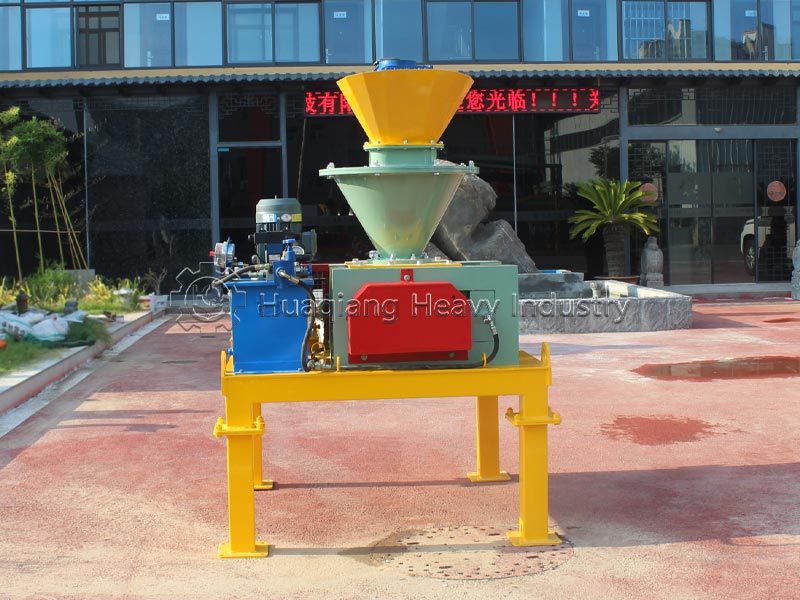

The Application Value of NPK Blending Fertilizer Equipment
As a key piece of equipment in compound fertilizer production lines, NPK blending machine can bring multi-dimensional core benefits to fertilizer manufacturers, including increased production capacity, optimized costs, and product diversification, helping companies enhance their market competitiveness.
From a production efficiency perspective, this type of equipment integrates automatic batching, precise mixing, and quantitative packaging functions, enabling continuous operation from raw material feeding to finished product output. This significantly reduces manual intervention, increasing production efficiency by more than 50% compared to traditional manual mixing methods, and ensuring precise and consistent nutrient ratios in each batch of fertilizer, effectively avoiding errors associated with manual mixing.
In terms of cost control, the equipment adopts a modular design, adapting to the mixing of nitrogen, phosphorus, and potassium raw materials of different particle sizes and specific gravities, as well as trace elements, without the need for additional binders, thus reducing raw material consumption costs. At the same time, automated operation reduces labor input, and the equipment has low energy consumption and a low failure rate, significantly reducing production and maintenance costs over the long term.
From a product perspective, the equipment allows for flexible adjustment of raw material ratios, enabling the rapid production of various specifications of NPK blended fertilizers, including general-purpose and crop-specific types (such as wheat-specific and fruit and vegetable-specific), meeting the needs of different planting scenarios and helping companies expand their product lines and capture market share in niche markets.
Furthermore, the equipment complies with environmental protection standards. The enclosed mixing structure reduces dust and waste of raw materials, and there are no wastewater or exhaust gas emissions during the production process, helping companies avoid environmental risks and achieve green and compliant production.