
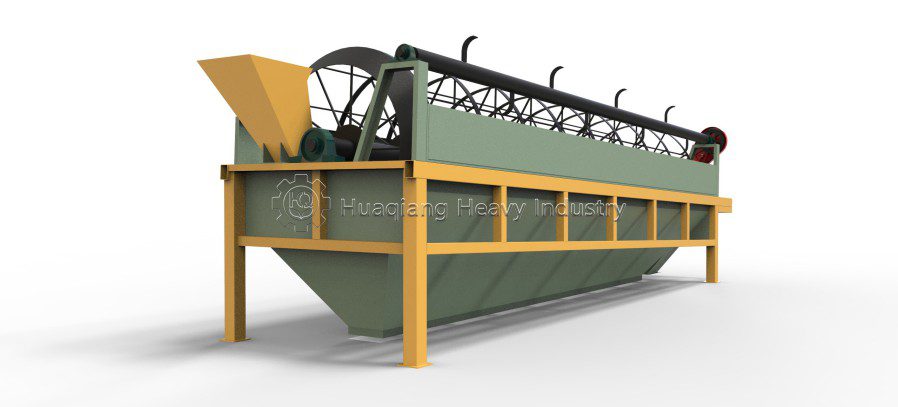
A rotary screen is a device that uses a rotating drum as its core and screens materials through screens of different aperture sizes to achieve material classification and screening. This equipment is widely used in the production of compound fertilizers and organic fertilizers, mainly for separating finished products from recycled materials and for product classification. The selection of a rotary screen requires comprehensive consideration of multiple factors, including production scale, material characteristics, screening particle size requirements, and site conditions. A scientifically sound selection and matching process ensures the equipment operates at its most economical level, maximizing return on investment.
The rotary screen employs a combined screen and sealing structure, effectively controlling dust and noise. The equipment features high screening efficiency, low noise, low dust emission, long service life, minimal maintenance, and convenient inspection. Depending on different classification requirements, materials can be divided into 1-4 sections from fine to coarse.
The main hardware components of a rotary screen include:
(I) Drum assembly: The core working component of the equipment, including the drum frame and screen mesh. The drum can be cylindrical or hexagonal in design. It is installed at an angle on the frame.
(II) Frame section: Constructed from high-quality carbon steel plates and channel steel.
(III) Transmission section: Motor, reducer, coupling, drive wheel, etc.
(IV) Screen system: Modular screen, which can be made of nylon, stainless steel, manganese steel, etc., as needed. It can be configured with 1-3 layers for multi-stage screening.
(V) Feeding, discharging, and sealing devices: Feed inlet, discharge outlets for each grade, sealing covers, dust covers. A chute is provided for the coarse material section.
Rotary screens are widely used in compound fertilizer production, organic fertilizer production, chemical industry, mining, building materials, power, environmental protection and other industries. They are suitable for screening various solid materials with a particle size of less than 300mm, and are especially suitable for screening sticky and wet materials.
Rotary screening machines can process a wide variety of materials. Fertilizers: organic fertilizer granules, compound fertilizer granules, blended fertilizer granules. Minerals: ores, sand, gravel, ceramsite, coal, coal slime. Environmental protection materials: compost products, waste treatment materials. Grains: grains, feed.
The working principle of a rotary screen is based on the synergistic effect of “mechanical rotation + gravity screening”. After the material enters the inclined rotating drum, it is tumbled by centrifugal force and gravity. Particles smaller than the screen mesh size pass through the screen, while particles larger than the screen mesh size move down the drum wall and are discharged. A variable speed reduction system drives the screening drum to rotate at a low speed.
The rotary screen is located after the cooler and before the packaging machine in the fertilizer production line. It forms a closed-loop return material circulation system with the granulator.
As a core screening device in the post-granulation processing stage, the rotary screen separates finished products, returned materials, and impurities.
The main users of rotary screening machines include: equipment procurement and selection personnel in fertilizer production enterprises; production line process designers; and equipment management personnel.