
Chain Crusher

Our Services

Have a
project in
mind?

Chain Crusher

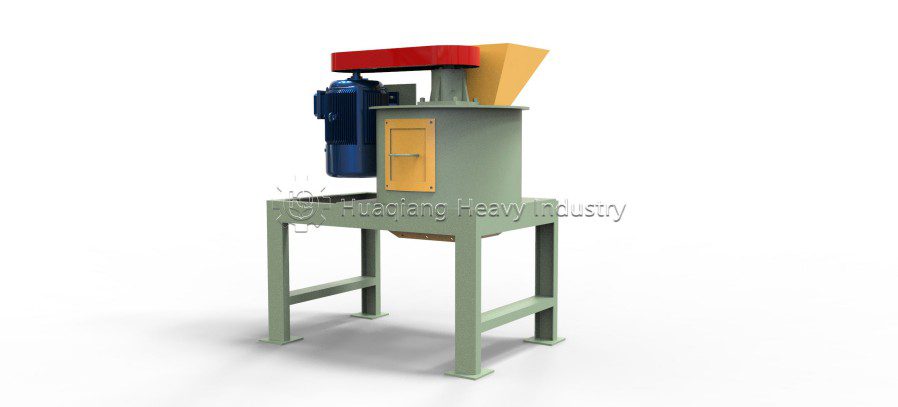
The chain crusher is specialized equipment designed to pulverize materials through the impact of high-speed rotating chains. Based on their installation configuration, these crushers come in two structural forms: vertical and horizontal. The vertical model features a single-rotor design, while the horizontal model utilizes a dual-rotor design; each type possesses distinct characteristics suited to different production scenarios.
The core advantage of the chain crusher lies in its unique “chain-impact crushing” principle, which achieves efficient pulverization by subjecting materials to repeated impacts and collisions from high-speed rotating chains. Compared to other types of crushing equipment, the chain crusher offers significant benefits when processing materials of medium hardness that contain a certain level of moisture. For fertilizer and chemical manufacturers seeking high crushing efficiency, uniform material output, and ease of maintenance, selecting the right chain crusher is key to establishing a highly efficient production line.

System Composition and Technical Architecture

The technical architecture of the chain crusher can be categorized into the following types:
(I) Vertical Chain Crusher (Single-Rotor): Features a single-rotor design. Driven by the rotor, material undergoes progressive impact crushing by multiple layers of chains. It has a relatively simple structure and is suitable for small- to medium-scale production.
(II) Horizontal Chain Crusher (Double-Rotor): Features a dual-rotor design, with each rotor shaft driven by its own motor. Upon entering the machine, material is struck by chains on one rotor and propelled toward the other, where it is struck again; after repeated impacts and beating, the material is discharged from the bottom of the unit. It is suitable for large-scale, continuous production.
(III) Drive System: Utilizes a V-belt drive mechanism with adjustable main shaft speed. The peripheral speed of the chain heads ranges from 28 to 78 m/s.
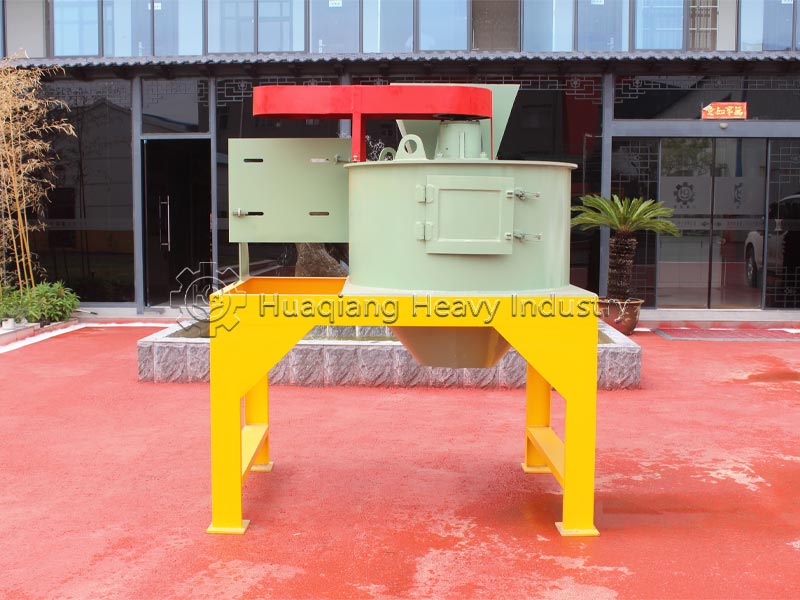
(IV) Anti-Adhesion and Protection Systems: The machine interior is lined with rubber or polypropylene plates. It is equipped with quick-opening access doors and a self-cleaning scraper mechanism. The machine body is mounted on a base fitted with vibration dampers.
Industry Applications and Process Compatibility

Chain crushers are suitable for a variety of industries. In the organic fertilizer industry, they crush lumpy organic materials—such as livestock manure and industrial sludge—both before and after fermentation. In the compound fertilizer industry, they break down large fertilizer lumps (with an average diameter exceeding 4 mm) into granular fertilizer sized 1–4 mm. In the chemical industry, they crush raw materials such as ammonium bicarbonate, ammonium chloride, and monoammonium phosphate. In the construction materials and mining sectors, they crush non-metallic minerals of low to medium hardness, such as limestone and dolomite.

Material Suitability Analysis

Chain crushers demonstrate strong adaptability to various materials. Moisture content: Capable of processing materials with a moisture content of up to 14% (excessive moisture can lead to adhesion and clogging). Acid content: Suitable for processing specialized materials, such as phosphate fertilizers containing 6% free acid. Material hardness: Suitable for medium-hardness lump materials. Particle size: Feed particle size is typically ≤60mm. Material type: Suitable for crushing various brittle materials (such as lumps or strips) with low structural strength, as well as agglomerated granular materials.

Key Selection Criteria and Procurement Recommendations

When selecting a chain crusher, focus on the following key points:
1. Structural type: Choose based on production scale. Opt for a vertical single-rotor model for small-to-medium-scale operations, and a horizontal double-rotor model for large-scale continuous production.
2. Processing capacity: Select the appropriate model based on daily throughput. Choose the LP500 for an hourly output of 1–3 tons; LP600 for 2–5 tons; LP800 for 3–8 tons; LP1000 for 5–10 tons; and LP1500 for 10–15 tons.
3. Material characteristics: Horizontal models are preferable for materials with high moisture content; for materials containing corrosive components, pay close attention to the material of the internal lining.
4. Crushing fineness: Select based on downstream process requirements; the resulting particle size is typically less than 0.7 mm or within the 0.5–5 mm range.
5. Equipment quality: Prioritize models featuring chains manufactured using a composite process that combines a carburized steel base with a carbide wear-resistant layer. Also, consider the internal lining material and the design of the maintenance access door.
6. After-sales service: Choose a manufacturer with comprehensive after-sales support to ensure access to installation guidance, operational training, and timely maintenance services.